A useful fall fragrance guide should describe how a scent might feel, not declare one bottle universally perfect. Temperature, skin, application and personal association all influence perception. Notes listed on a product page are a map of the composition, not a promise that every wearer will smell the same thing.
The nine profiles below are grouped into five mood families and illustrated without brand packaging. Sample one fragrance at a time when possible, avoid spraying near the eyes or irritated skin, follow label directions and be considerate in shared spaces where fragrance sensitivity may be a concern.
For an energizing fall scent, look for bergamot or orange with cardamom. For calm warmth, try cedar, vetiver, tea or soft musk. Vanilla and tonka feel comforting; plum, rose and dark berries feel dressed-up. Test on skin, wait through the dry-down and choose the profile you still enjoy several hours later.
1. Bright comfort: orange-cardamom and ginger-bergamot
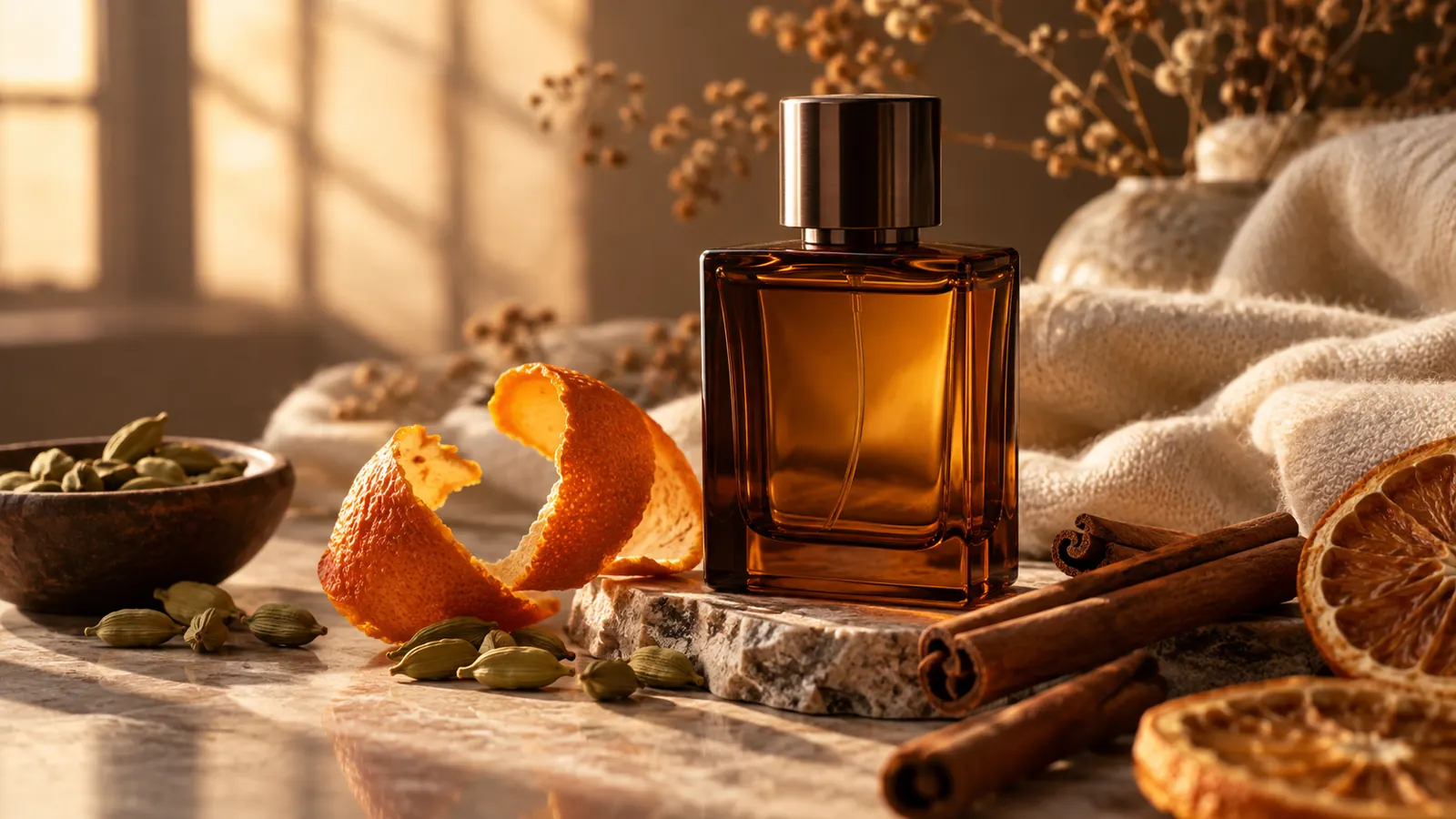
Mood one, orange-cardamom, feels like late-afternoon light: warm, gently sweet and still lively. Mood two, ginger-bergamot, is drier and more energetic, using sparkling citrus and peppery freshness before a softer base appears.
Search note lists for bergamot, mandarin, bitter orange, cardamom or ginger paired with restrained woods or amber. Test long enough to learn whether the citrus disappears cleanly or leaves a sweetness you did not expect.
These profiles suit early fall and daytime wear because their opening feels open rather than dense. If cinnamon easily overwhelms you, begin with cardamom or ginger and avoid equating stronger projection with better quality.
How to shop the profile
- Sample on paper first to understand the opening.
- Try one candidate on skin and wait through the dry-down.
- Choose orange-cardamom for softness or ginger-bergamot for brightness.
This mood fits: Mornings, transitional weather and people who want warmth with visible freshness.
2. Quiet woods: cedar-vetiver and soft smoky woods
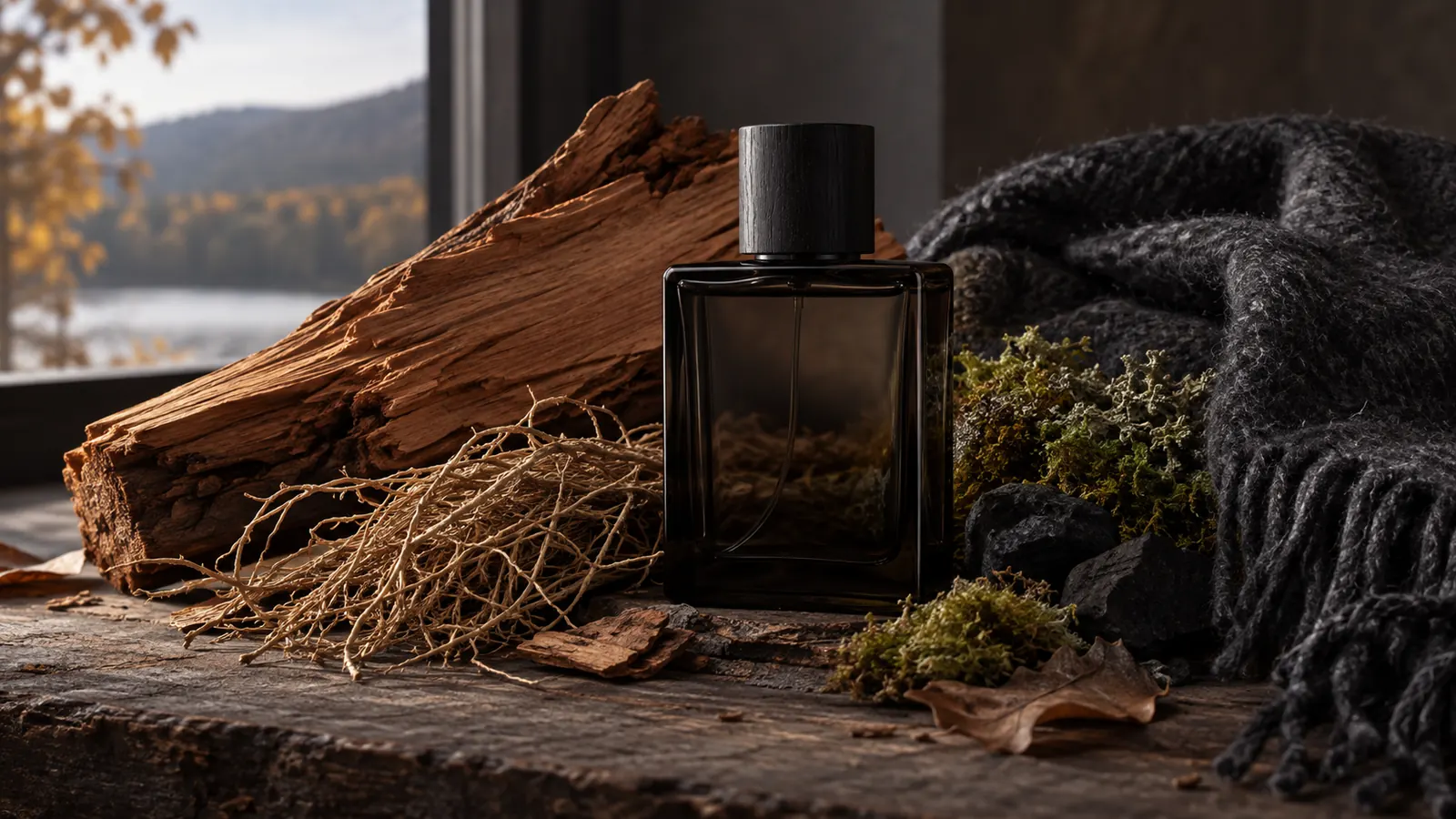
Mood three, cedar-vetiver, is calm, dry and tailored rather than obviously sweet. Mood four adds soft smoky woods—incense, guaiac or a restrained fireplace impression—for a more atmospheric result that should remain wearable, not acrid.
Look beyond the word woody and identify the supporting notes. Citrus and vetiver can make cedar feel crisp; vanilla or amber makes it rounder; smoke and resin make it darker. Sampling reveals which direction dominates after the opening fades.
Apply lightly at first because smoky materials can expand in warm rooms. If you want the mood without literal smoke, try cedar with tea, moss or clean musk instead.
How to shop the profile
- Identify whether you prefer dry, creamy or smoky woods.
- Test projection in the environment where you will wear it.
- Revisit the sample after several hours before judging longevity.
This mood fits: Work, quiet evenings, tailored clothing and anyone who dislikes sugary fragrances.
3. Soft sweetness: vanilla-tonka and toasted almond
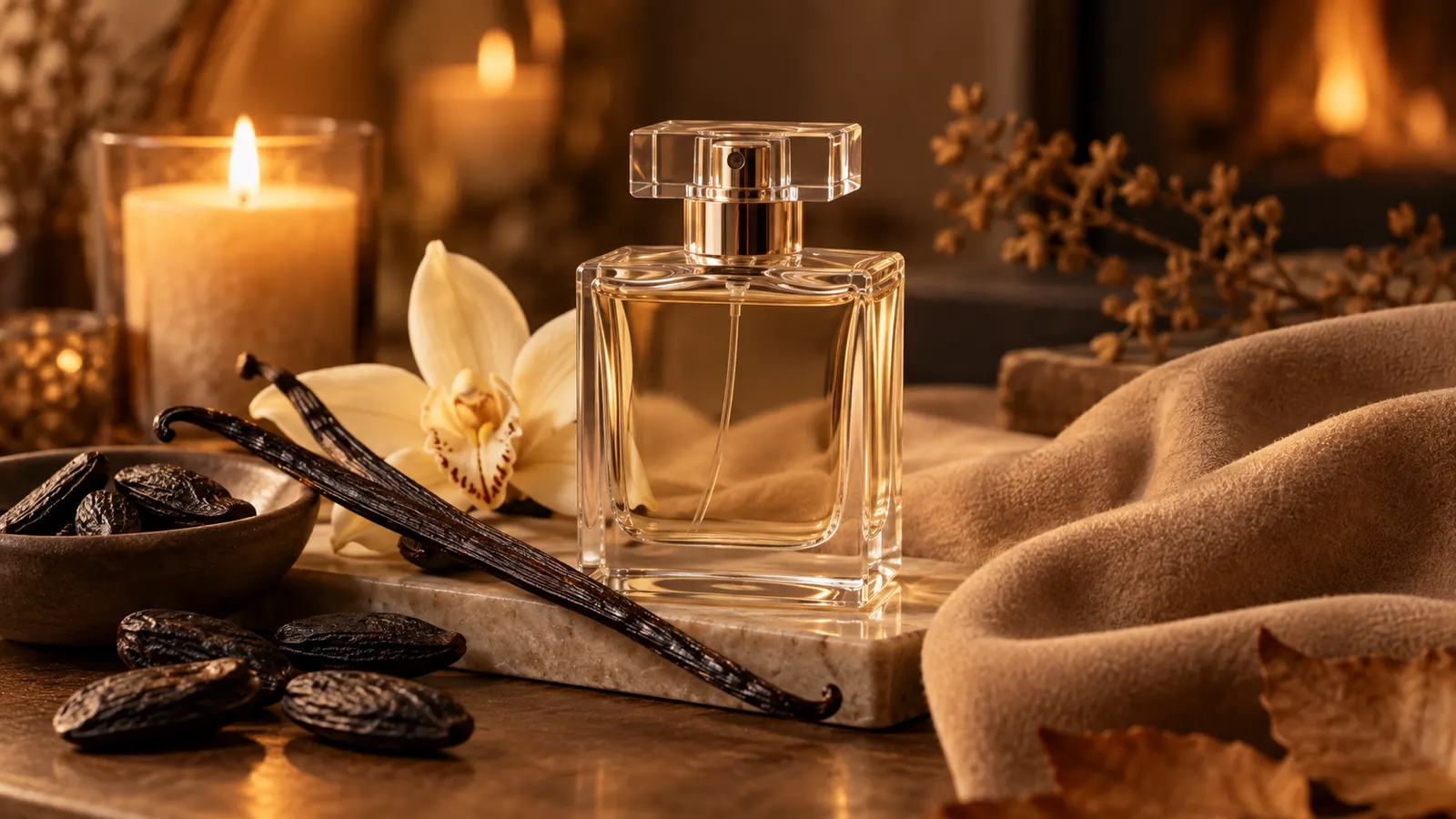
Mood five, vanilla-tonka, is a smooth blanket-like profile with almond, hay or gentle tobacco facets depending on the composition. Mood six, toasted almond, feels more distinctly gourmand but can remain elegant when balanced by woods, iris or soft suede.
Notice whether the first impression resembles sugar, bakery spice, dry vanilla pod or cosmetic powder. If you want comfort without dessert, prioritize woods, musk or iris in the base and avoid very syrupy fruit pairings.
Sweet fragrances often become more noticeable in heated interiors. One or two light applications may be enough, and testing a smaller area helps you assess the scent without fatigue.
How to shop the profile
- Decide how edible you want the fragrance to feel.
- Compare the opening with the late dry-down.
- Choose vanilla-tonka for softness or toasted almond for a clearer gourmand mood.
This mood fits: Cold evenings, knitwear and anyone seeking a warm, enveloping profile.
4. Dressed-up depth: plum-rose and dark berries
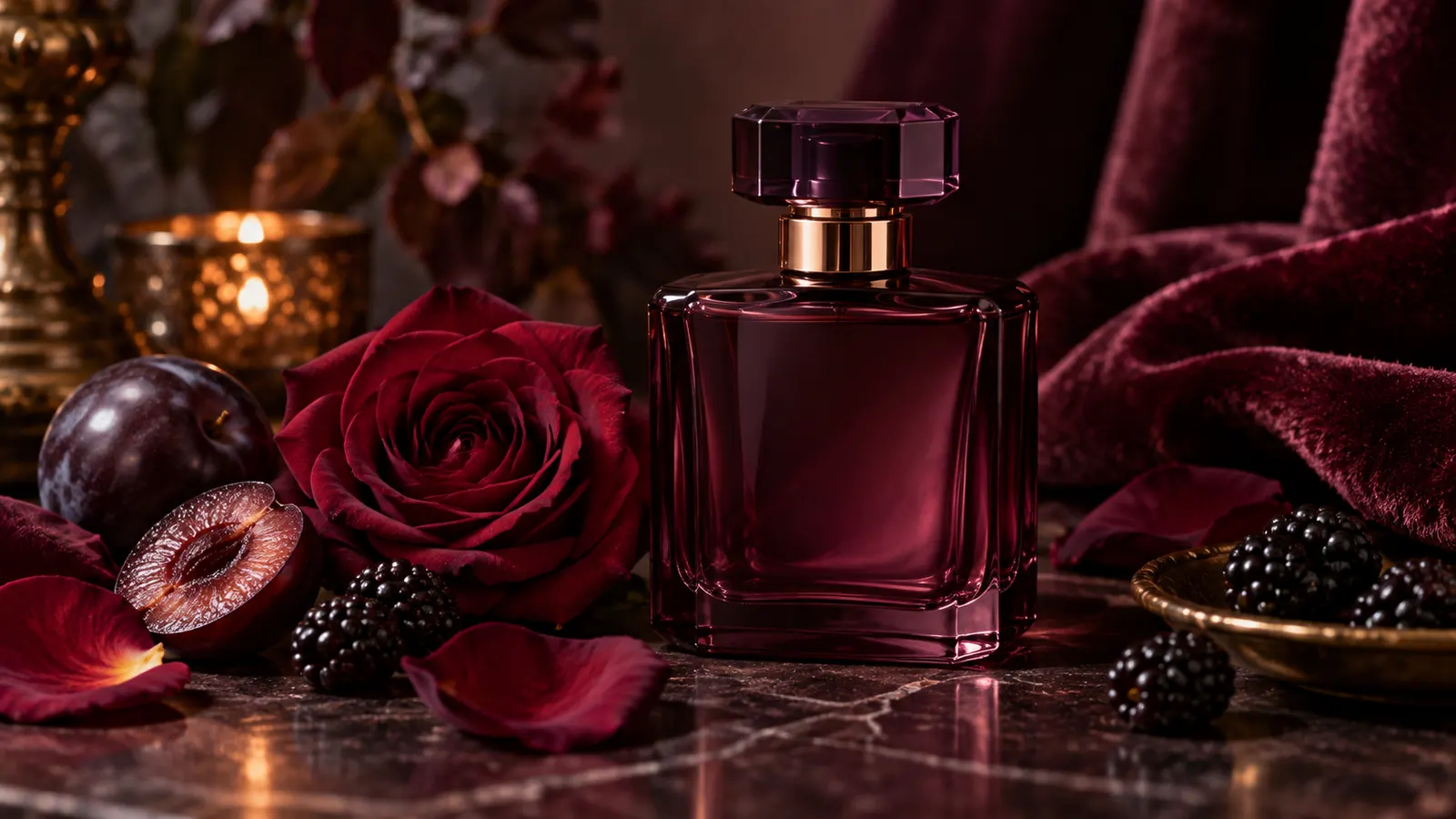
Mood seven, plum-rose, combines velvety fruit with a recognizable floral center and feels especially suited to dinner. Mood eight, dark berries with woods, is less floral and more shadowed, often balancing blackcurrant or blackberry effects with cedar, amber or patchouli.
Fruit note names do not indicate sweetness on their own. Test whether the fragrance develops into rose, woody amber, musk or syrup. A balanced profile should have enough structure that the fruit remains interesting after its bright opening.
These moods often project more than tea or clean musk profiles, so apply conservatively before an indoor event. Clothing can hold fragrance longer than skin, but follow product directions and consider delicate fabrics.
How to shop the profile
- Choose plum-rose for floral elegance or dark berries for a woodier effect.
- Wear-test with the outfit and setting you have in mind.
- Check the scent at close range and normal conversation distance.
This mood fits: Dinner, events, burgundy palettes and people who enjoy expressive fruit-floral scents.
5. Rainy-day calm: black tea, bergamot and soft musk
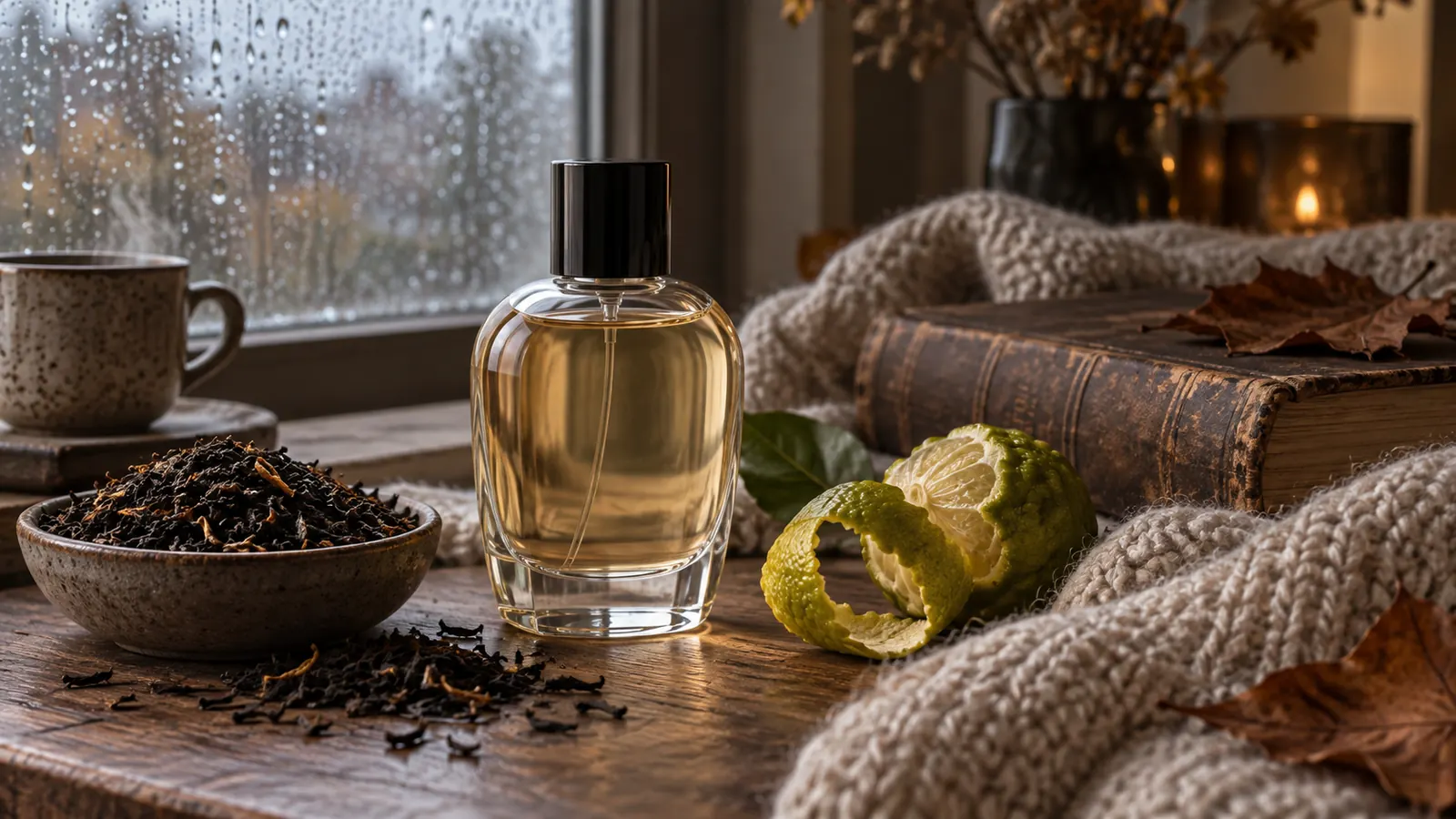
Mood nine is built around black tea, bergamot and soft musk. It suggests steam, paper and a clean knit rather than literal sweetness, making it the quietest option in this guide.
Look for tea supported by citrus, iris, woods or musk. Some tea fragrances are smoky, some green and some sweetened; sample on skin to see which interpretation survives beyond the first few minutes.
A close-wearing fragrance can still be successful even if other people do not notice it from across a room. Judge it by how often you enjoy catching it during the day, not by maximum projection.
How to shop the profile
- Test tea fragrances individually because their styles vary widely.
- Wear the sample through both outdoor and indoor temperatures.
- Choose the one whose dry-down remains calm rather than flat.
This mood fits: Reading days, offices, travel and people who prefer subtle personal fragrance.
Frequently asked questions
What makes a fragrance feel cozy for fall?
Warm spices, woods, amber-like accords, vanilla, tea, musk and darker fruit are often associated with warmth. Balance and personal association matter more than any required note.
Should fragrance be tested on paper or skin?
Paper is useful for screening the opening, while skin reveals how the fragrance develops for you. Test one or two candidates and give them time before deciding.
How much fall fragrance should I apply?
Begin lightly and follow the product directions. Projection changes with formula, temperature and setting, and shared spaces may call for restraint.
Are natural fragrance ingredients automatically safer?
No. Natural and synthetic fragrance materials can both cause sensitivity in some people. Follow labels, avoid irritated skin and stop use if a reaction occurs.
Sources and further reading
These authoritative resources support the safety or health context used in this guide. Links are reviewed at publication, but they do not replace advice from a qualified professional familiar with your circumstances.
- U.S. Food and Drug Administration — CosmeticsOfficial information on cosmetic products, labeling and safety responsibilities.
Anna reviewed the article for clarity, image relevance, realistic expectations and alignment with the Lively Edit editorial policy. Safety and health claims are checked against appropriate authoritative sources; the updated date changes only after a meaningful review.
Read our editorial process →The images in this story were created with AI as original editorial visuals and reviewed to ensure that each image is relevant to the accompanying guidance.