A useful sheet-pan dinner is more than several ingredients placed on the same tray. The vegetables need enough room to brown, the protein needs to stay juicy, and everything should reach the table at the right moment. Autumn produce makes that balance easier: squash, sweet potatoes, Brussels sprouts, cauliflower and mushrooms all become sweeter and more savory in a hot oven.
The five dinners below use different proteins and one vegetarian and one vegan option, but the method stays consistent. Preheat thoroughly, dry washed ingredients, coat them lightly rather than flooding the pan with oil, and resist crowding. Cooking times vary with ingredient size, oven performance and pan material, so treat the visual cues as guidance and verify animal proteins with an instant-read thermometer.
The best fall sheet-pan dinners combine ingredients that finish at roughly the same time—or add quicker-cooking components later. Heat the empty pan while the oven warms, cut dense vegetables smaller than tender ones, leave space for steam to escape and check meat or fish with a thermometer rather than relying on color alone.
1. Maple-Dijon chicken with squash and Brussels sprouts
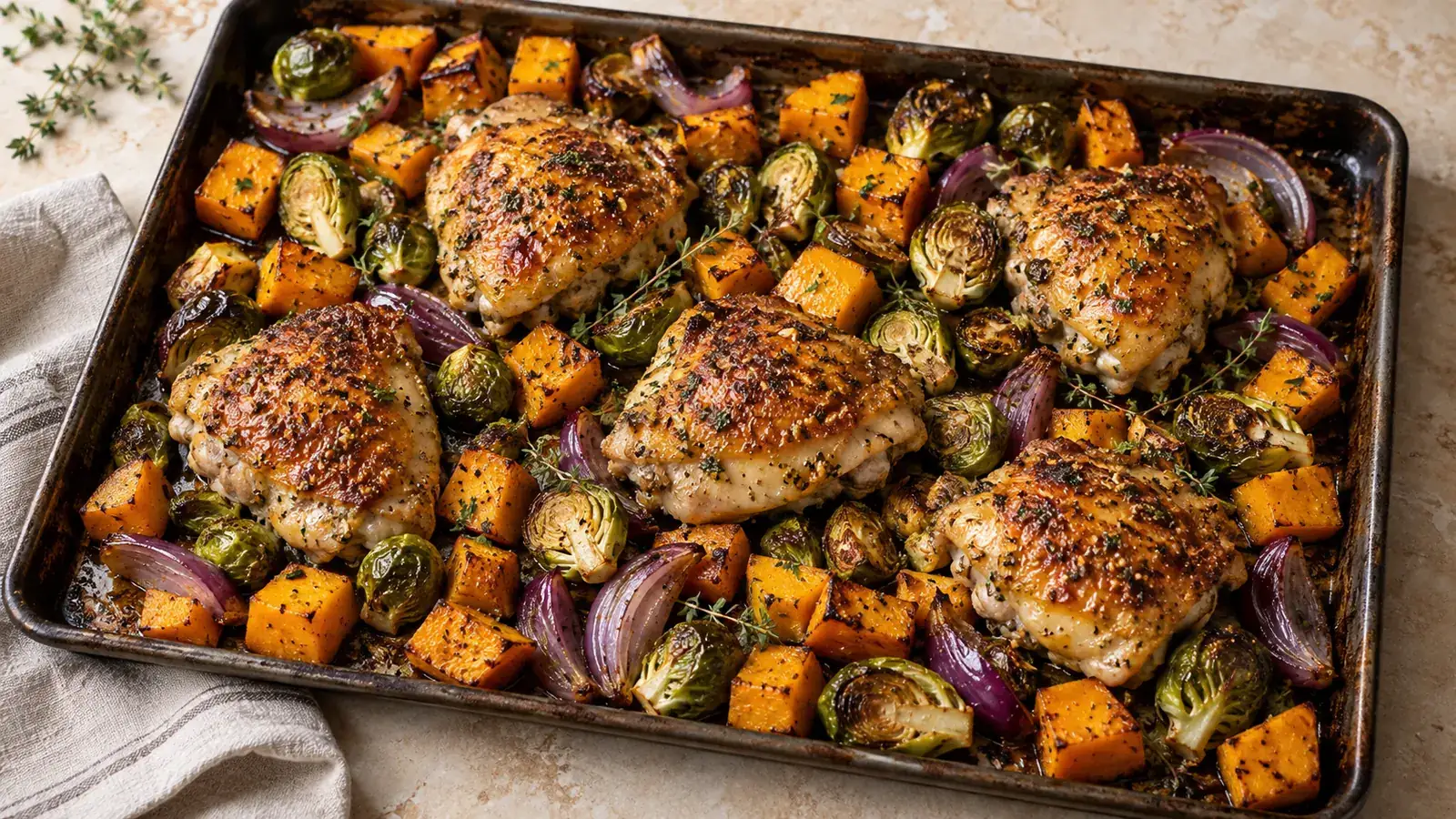
For four servings, use four to six bone-in or boneless chicken thighs, about four cups of cubed butternut squash and halved Brussels sprouts, and one red onion cut into thick wedges. Stir together Dijon mustard, a modest spoonful of maple syrup, olive oil, thyme, black pepper and salt. Keep part of the mixture separate for brushing the chicken so raw poultry never touches sauce used at the table.
Squash needs more time than onion, while Brussels sprouts brown best when their cut sides touch the pan. If your squash cubes are larger than about a bite, give the vegetables a short head start. Place the chicken with space around each piece and roast until the vegetables are tender and browned and the thickest part of the chicken has reached a safe internal temperature.
How to make it
- Heat the oven and a large rimmed sheet pan; toss squash, sprouts and onion with oil and seasoning.
- Roast dense vegetables for 10 minutes first if they are cut large.
- Add the chicken, brush with maple-Dijon mixture and keep space between each piece.
- Continue roasting until the vegetables caramelize and the chicken is safely cooked; rest briefly before serving.
Best for: A family dinner with sweet-savory flavor and vegetables sturdy enough to reheat for lunch.
2. Lemon-herb salmon with sweet potatoes and broccoli
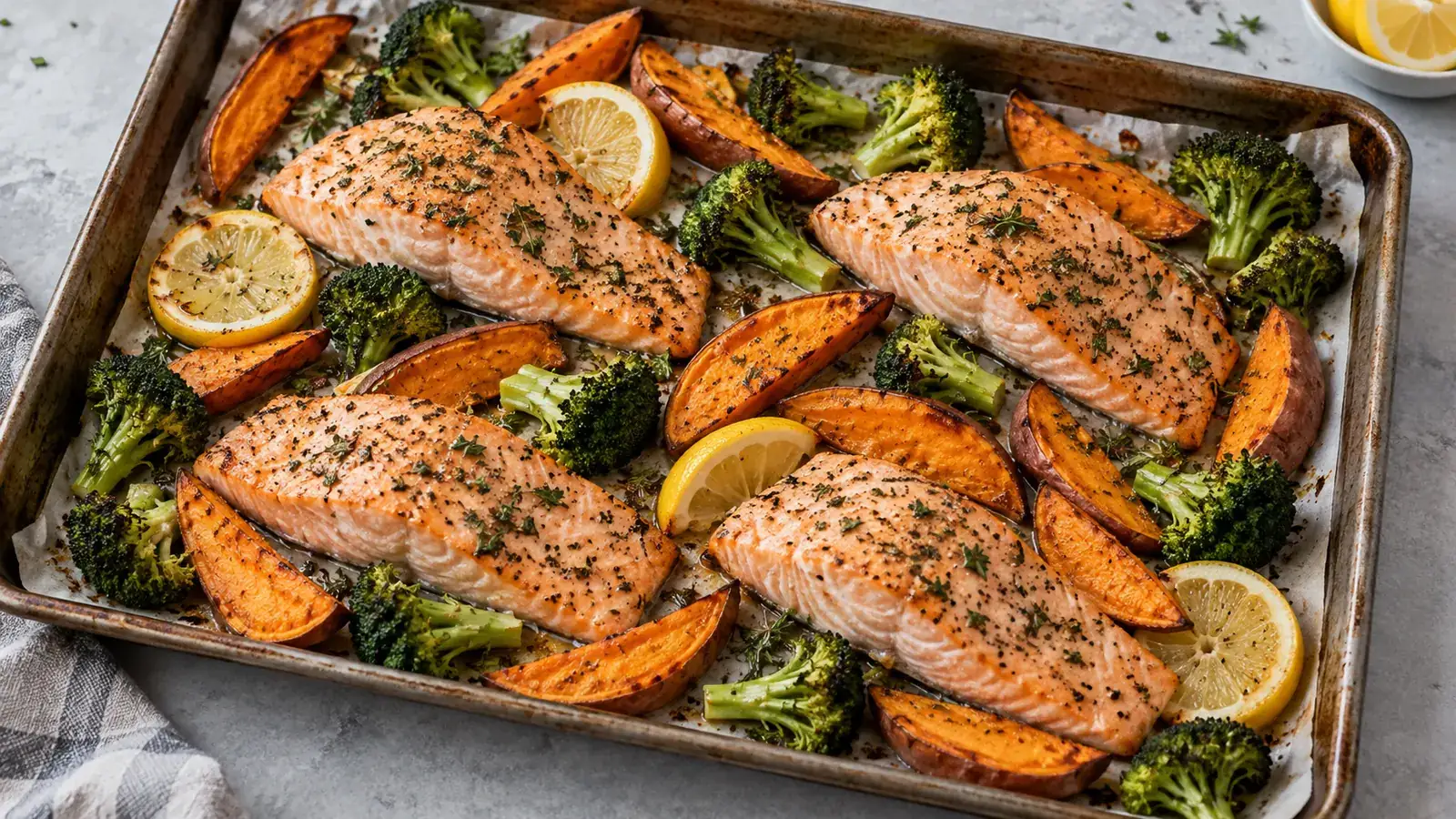
Salmon cooks much faster than sweet potato, so this meal is intentionally assembled in stages. Cut two medium sweet potatoes into slim wedges, season them with oil, pepper and a small amount of salt, and roast until they begin to soften. Add broccoli florets next, turning them in the oil already on the tray, then make room for four salmon portions.
Season the salmon with lemon zest, herbs and black pepper, placing thin lemon slices around rather than completely over the fish so the surface can roast. The salmon is ready when it reaches your preferred safe doneness and flakes easily at the thickest point. Pull individual portions early if they differ greatly in thickness; the vegetables can remain in the oven for a few extra minutes.
How to make it
- Roast slim sweet potato wedges until their undersides begin to color.
- Add broccoli and return the pan to the oven for several minutes.
- Place seasoned salmon on the cleared center of the tray and add lemon.
- Roast only until the salmon is safely cooked, then brighten everything with fresh lemon juice.
Best for: A colorful dinner with minimal preparation and leftovers that can be served cold over greens.
3. Crispy gnocchi with mushrooms, delicata squash and sage
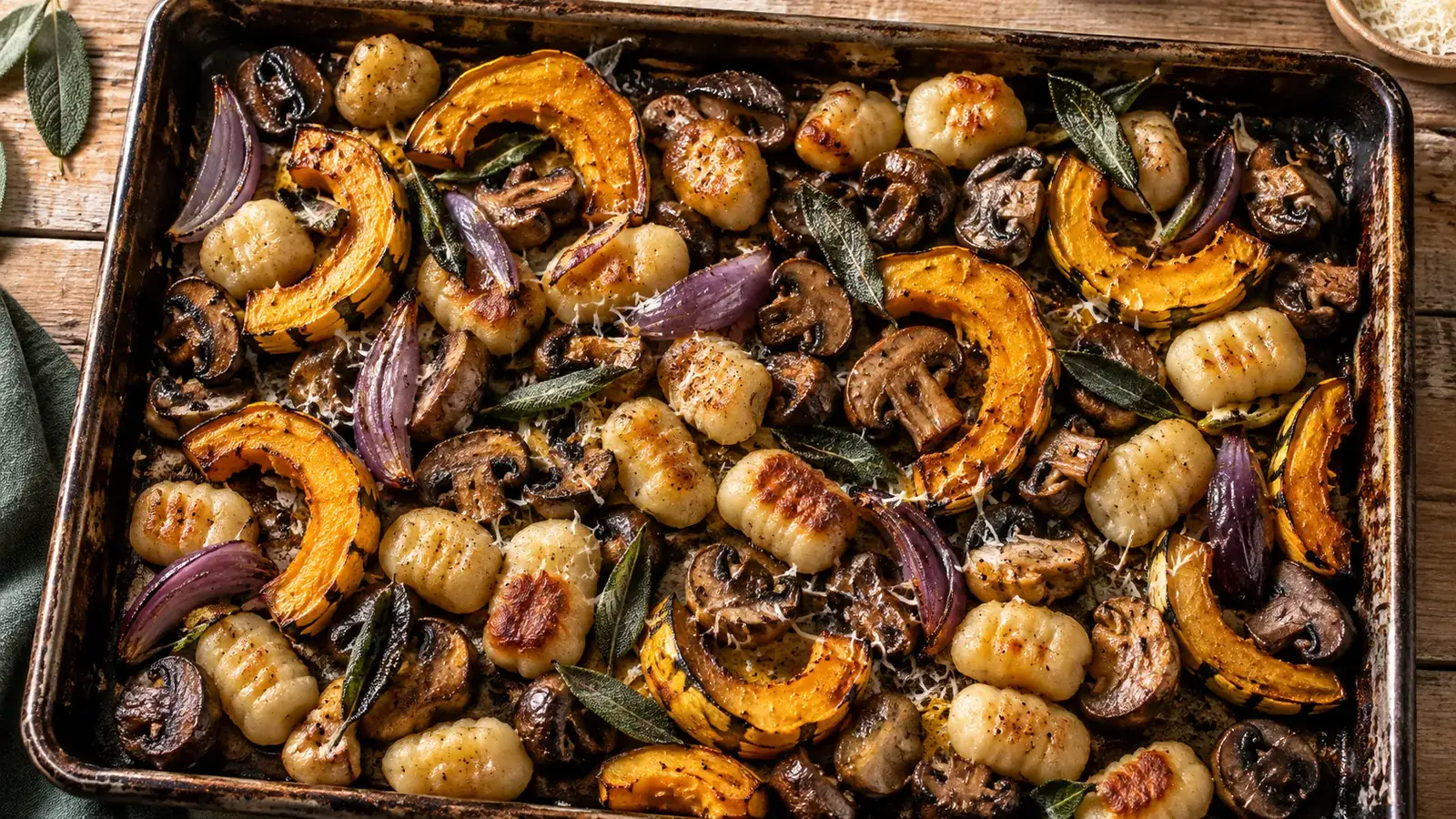
This vegetarian tray works best with shelf-stable gnocchi that can roast without boiling; check the package if you are unsure. Combine it with sliced mushrooms, thin half-moons of seeded delicata squash and red onion wedges. Toss with olive oil, pepper and salt, but keep the mushrooms in larger pieces because they shrink as their moisture evaporates.
Spread everything in one layer and turn the ingredients once the gnocchi undersides are golden. Add sage leaves near the end so they become fragrant without burning. Finish with grated Parmesan or a vegetarian hard cheese and a squeeze of lemon. For a vegan version, skip the cheese and add toasted pumpkin seeds after roasting.
How to make it
- Toss gnocchi, squash, mushrooms and onion lightly with oil and seasoning.
- Spread in one uncrowded layer, using two pans if necessary.
- Roast until the gnocchi and squash brown, turning once and adding sage near the end.
- Finish with lemon and Parmesan or pumpkin seeds.
Best for: Meatless nights, cooks who want no separate pot and anyone who prefers crisp gnocchi to a soft boiled texture.
4. Smoky turkey meatballs with cauliflower and carrots
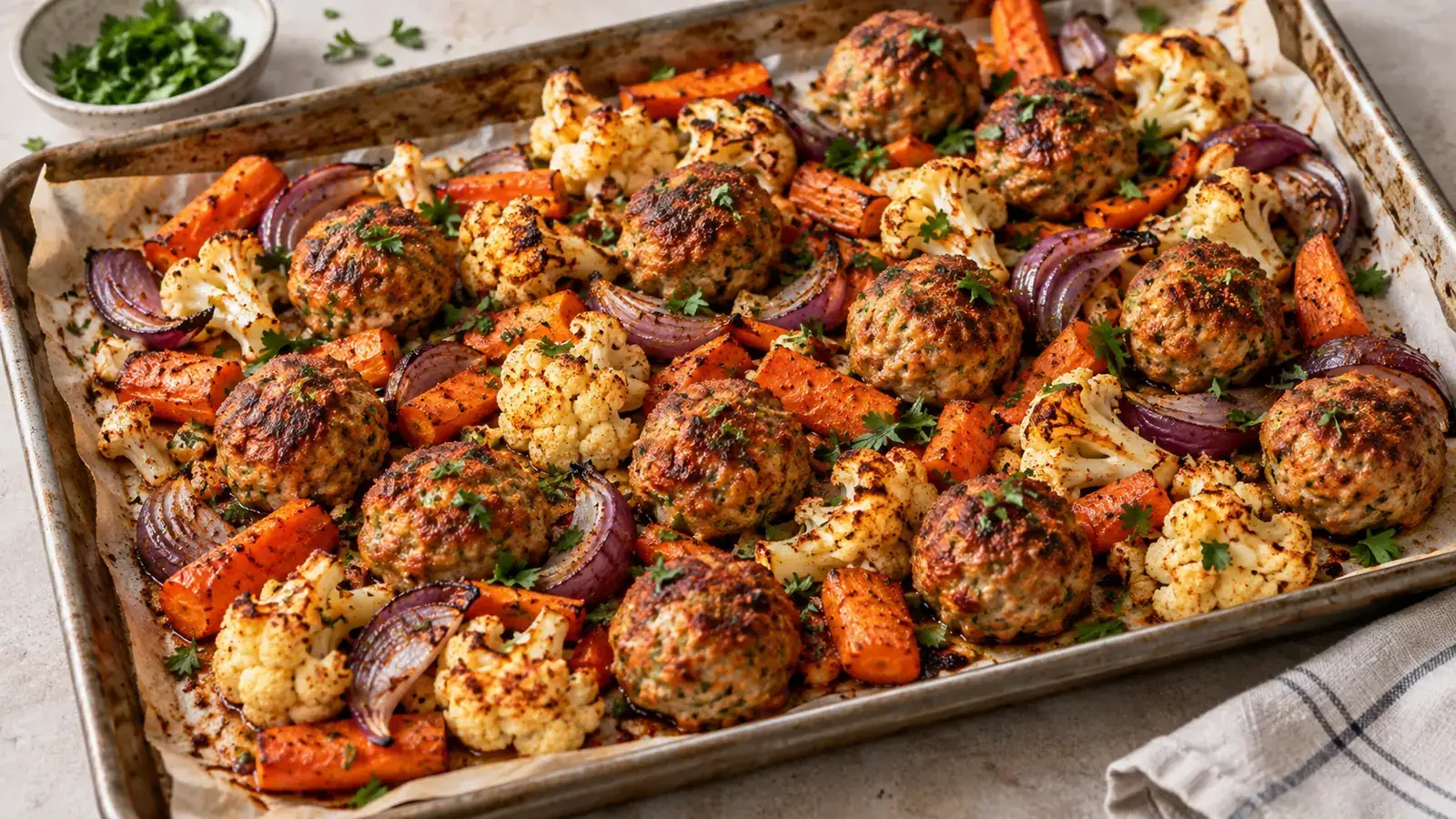
Mix ground turkey gently with breadcrumbs, an egg, grated onion, garlic, parsley, smoked paprika, pepper and salt. Overworking the mixture makes meatballs dense, so stop as soon as the ingredients are evenly distributed. Shape small meatballs with damp hands and keep them consistent in size so they finish together.
Cut carrots into short batons and cauliflower into modest florets, then toss both with red onion, oil and paprika. Roast the vegetables briefly before adding the meatballs if the carrot pieces are thick. Arrange the meatballs directly on the pan with room around them and cook until browned and safely cooked through. A yogurt-lemon sauce can be mixed separately while the tray is in the oven.
How to make it
- Combine the meatball mixture gently and shape evenly sized balls.
- Season cauliflower, carrots and onion and give dense pieces a short head start.
- Add meatballs with enough room for browning rather than steaming.
- Cook until the turkey reaches a safe internal temperature, then serve with herbs or yogurt-lemon sauce.
Best for: Meal prep, family dinners and a high-protein tray that can be served with flatbread or grains.
5. Crispy chickpeas with cauliflower, squash and tahini
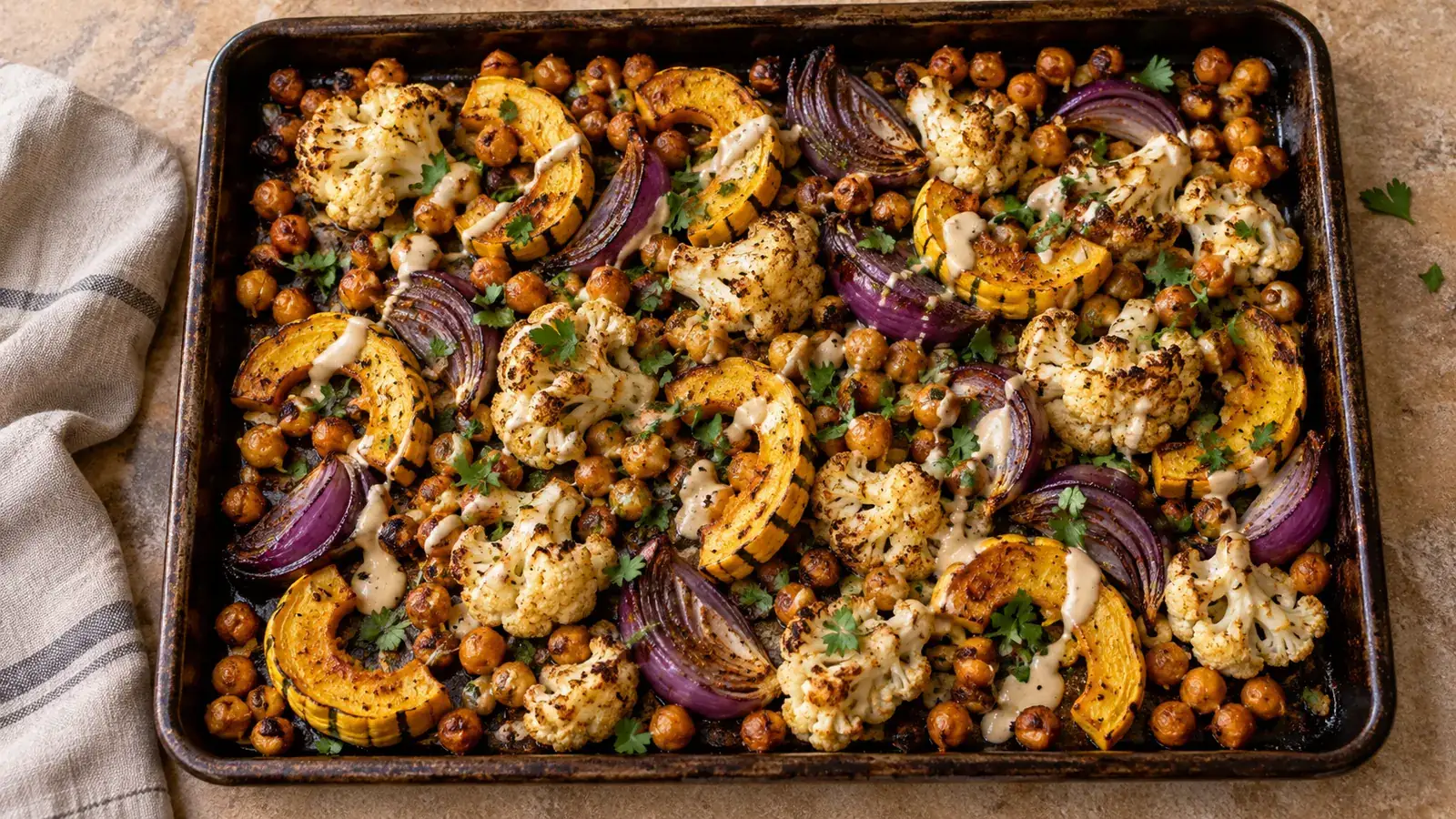
Drain and rinse canned chickpeas, then dry them thoroughly with a clean towel. Moisture is the enemy of crisp edges. Toss them with cauliflower florets, thin delicata squash slices and red onion, using enough olive oil to coat lightly. Cumin, coriander, garlic powder, black pepper and salt build warmth without overwhelming the vegetables.
Roast until the cauliflower has dark tips, the squash is tender and the chickpeas feel firmer at the edges. Whisk tahini with lemon juice, water and salt until pourable, adding water gradually because tahini thickens before it loosens. Drizzle only the portions you are serving; keeping leftover roasted components dry helps them reheat more successfully.
How to make it
- Dry the chickpeas very well and cut vegetables into similarly quick-cooking pieces.
- Season lightly and spread across a large hot tray without piling.
- Roast until browned, turning once so multiple surfaces meet the pan.
- Serve with lemon-tahini sauce, parsley and optional warm flatbread.
Best for: A vegan dinner, pantry-led cooking and leftovers that can become a grain bowl the next day.
Frequently asked questions
What temperature is best for sheet-pan dinners?
A hot oven encourages browning, but the right setting depends on your ingredients and cookware. Many mixed trays work well around 425°F (220°C). Reduce the heat when using delicate glazes that scorch easily, and always follow appliance and recipe-specific guidance.
Why are my sheet-pan vegetables soggy?
The usual causes are crowding, excess surface moisture, too little heat or a pan with high sides that traps steam. Dry vegetables, use a broad metal tray and divide the food between two pans when necessary.
Can I prepare these dinners ahead?
Vegetables can be cut and sauces mixed in advance, but store raw meat or fish separately and safely. For the crispest result, wait to oil and salt most vegetables until shortly before roasting.
Do I need parchment paper?
No. Parchment simplifies cleanup, while direct contact with a lightly oiled metal pan can produce stronger browning. Follow the parchment manufacturer's temperature limit and avoid using wax paper.
The images in this story were created with AI as original editorial visuals and reviewed to ensure that each image is relevant to the accompanying guidance.