How to understand this result
This quiz offers style inspiration, not an objective assessment of beauty or skin tone. Cameras, makeup, hair color, lighting and surrounding colors can change what you see. Personal preference matters, and anyone can wear any color by adjusting its shade, placement or contrast.
Run a useful daylight comparison
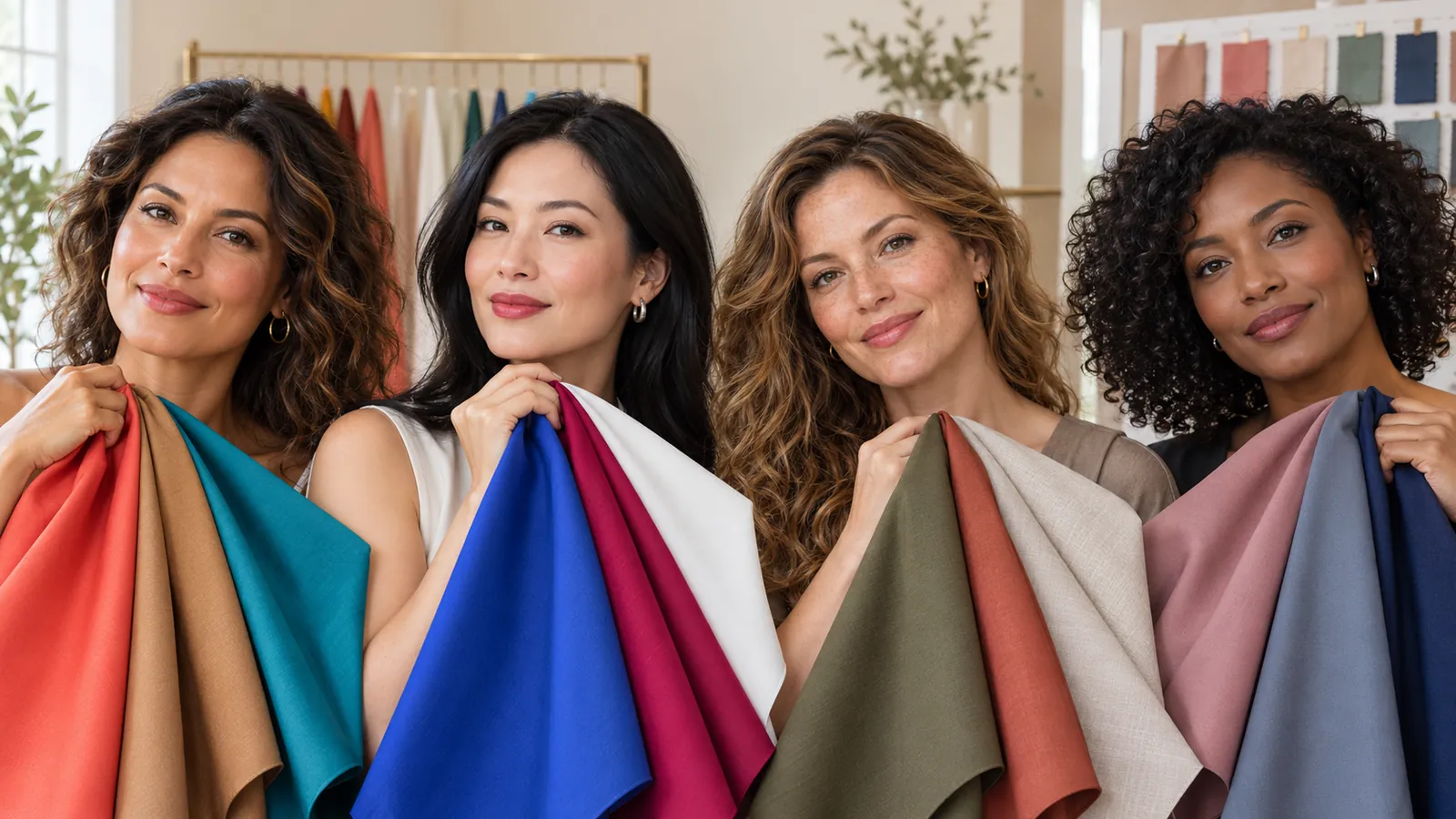
Stand near a window in indirect daylight, remove strongly colored surroundings when possible and hold two fabrics at the same height below your face. Look back and forth rather than judging one color alone.
Notice whether the color keeps attention on your eyes and facial contours. Do not chase perfectly even skin: natural redness, shadows and texture are normal.
Test temperature and saturation separately
A disappointing color does not always mean its temperature is wrong. It may simply be too bright, too dusty, too dark or too light. Compare similar depths first—such as tomato red with raspberry—then compare clear and muted versions.
Use several comparisons before choosing a direction. Jewelry, vein color and one favorite lipstick are clues, not reliable tests by themselves.
Wear difficult colors strategically
You do not need to remove a color you love. Move it farther from the face, break it with a neckline, add a familiar neutral or choose a different version of the same hue.
Treat the result as a shopping filter for coordination, not permission. The best wardrobe palette is the one you enjoy wearing and can combine repeatedly.
How to use the quiz constructively
- Notice the answer that felt easiest and the one that made you hesitate.
- Treat the result as useful vocabulary, not a permanent label.
- Choose one small next step from your result and test it in ordinary life.
- Retake the quiz later if your circumstances or priorities change.