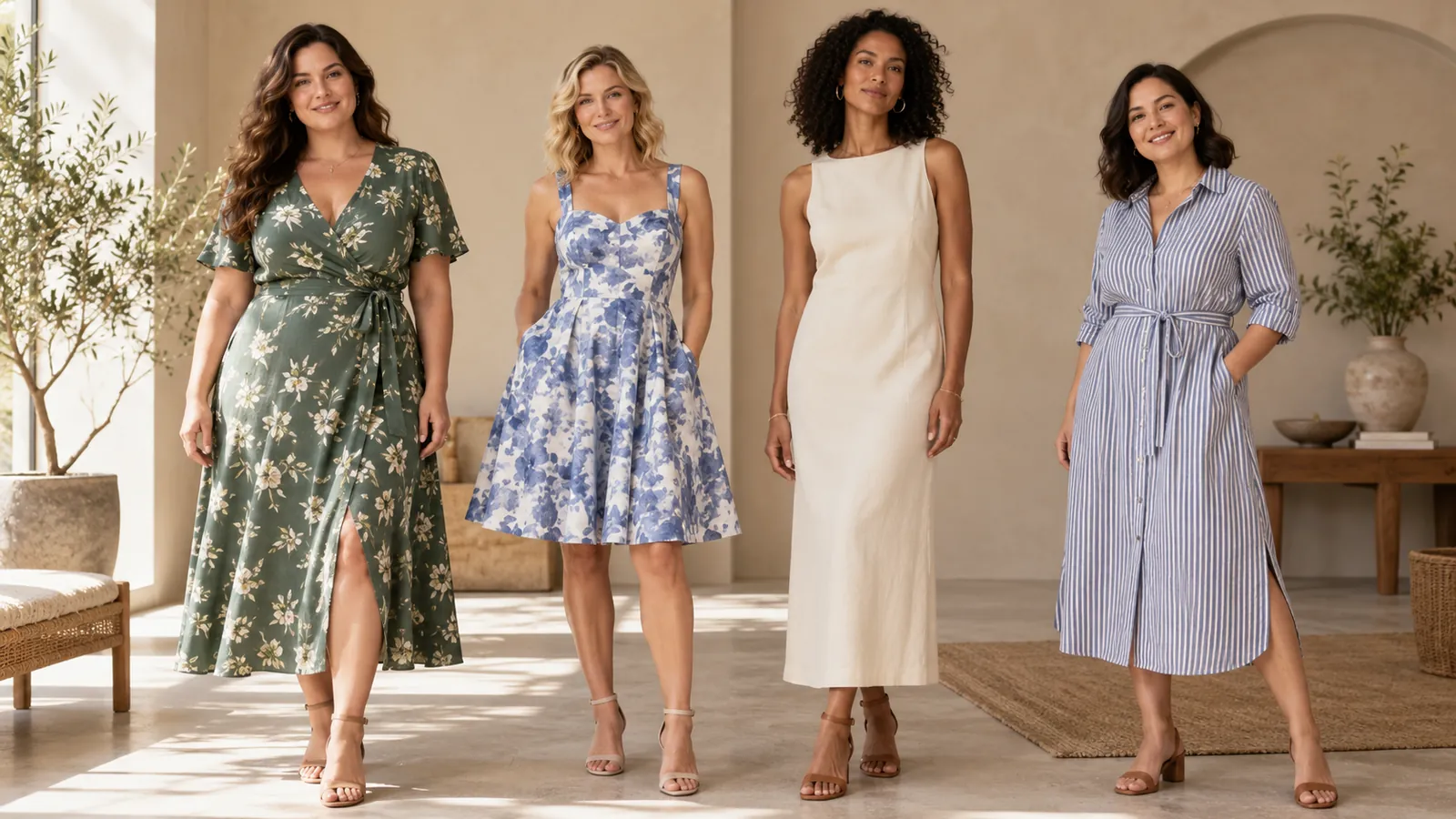
How to understand this result
Body-shape categories are optional styling tools, not standards of beauty or health. Bodies rarely match one label, sizing varies by brand and tailoring can matter more than the name of a silhouette.
Fit the least adjustable area first
Shoulders, armholes and bust construction are often harder to alter than a waist or hem. Start there, then evaluate the rest of the silhouette.
Ignore the size printed on the label when it conflicts with comfortable movement; sizing is not standardized.
Use proportion, not correction
Styling can repeat, soften or contrast your natural proportions, but no body area needs to be hidden. Decide what visual effect you enjoy instead of treating a silhouette as a rule for your shape.
Photograph a dress from the front, side and while seated to judge real-life fit.
Small alterations can outperform shopping
A hem, strap or waist adjustment can turn an almost-right dress into a reliable favorite. Before returning it, identify whether one localized change would solve the problem.
Do not keep a painful or restrictive garment for a hypothetical future body.
How to use the quiz constructively
- Notice the answer that felt easiest and the one that made you hesitate.
- Treat the result as useful vocabulary, not a permanent label.
- Choose one small next step from your result and test it in ordinary life.
- Retake the quiz later if your circumstances or priorities change.