A useful fall outfit is less about owning the newest piece and more about having a formula you can repeat. When mornings are cool and afternoons are mild, removable layers, comfortable shoes and clear proportions do most of the work.
Use these looks as equations rather than shopping lists. Substitute the colors, cuts and fabrics already in your wardrobe, then adjust warmth for your climate. The goal is to identify why each combination works so it becomes easier to dress with confidence on ordinary days.
The easiest fall outfits begin with a reliable bottom, a simple top and one useful layer. A trench with jeans, blazer with trousers, cardigan with a slip skirt or utility jacket with a knit dress can be repeated by changing shoes and color. Prioritize comfortable proportions and layers that can be removed as temperatures change.
1. Trench coat + white shirt + straight jeans
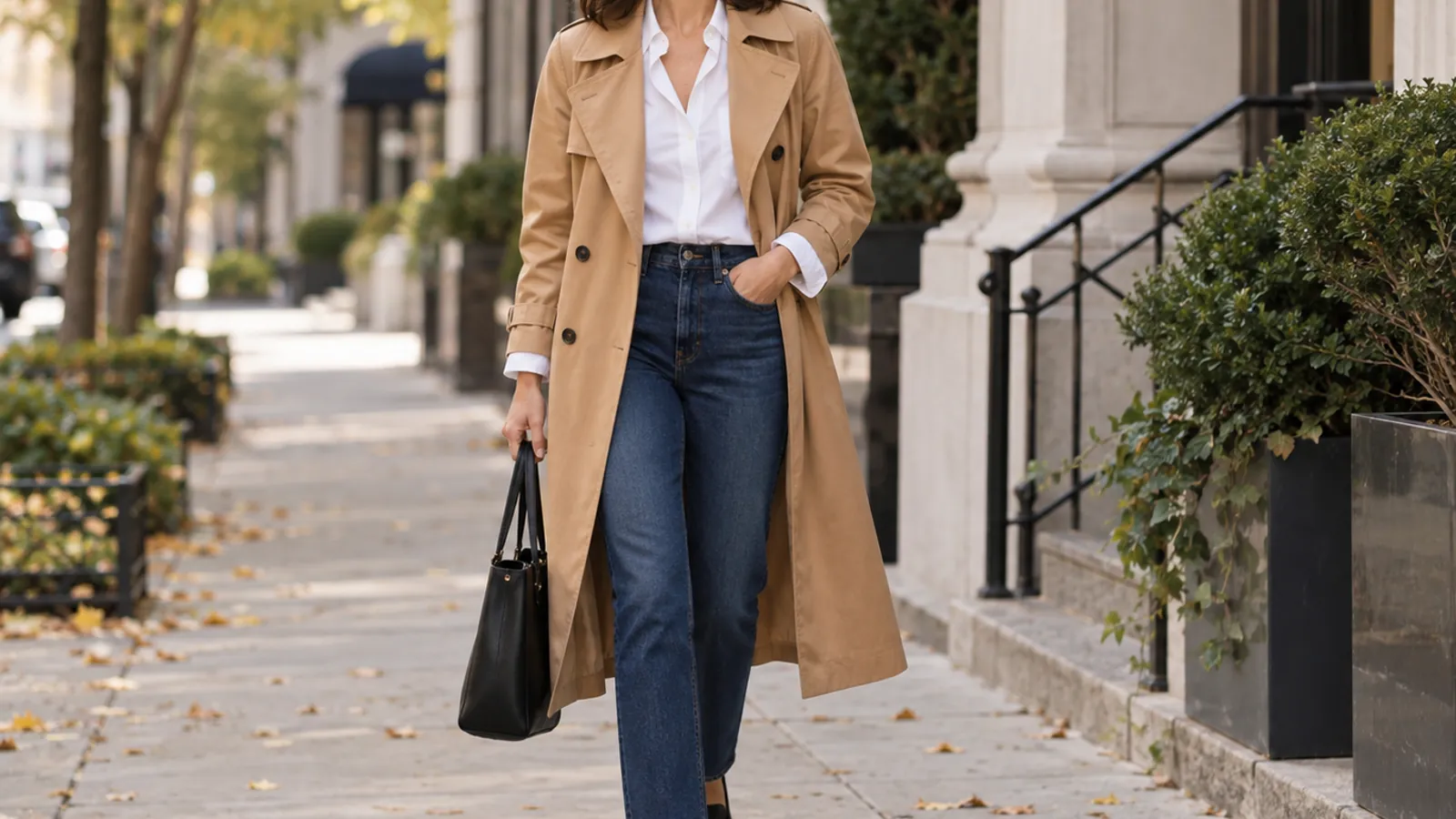
This formula works because each piece has a different role: the shirt adds brightness, dark denim grounds the look and the trench creates structure without heavy insulation. Straight jeans balance classic loafers and remain easy to wear with ankle boots later in the season.
Choose a trench roomy enough to close over a light sweater. If the coat and jeans are relaxed, a partial shirt tuck or visible cuff prevents the layers from losing definition.
How to build the formula
- Start with straight jeans at a comfortable rise.
- Add a white or cream shirt and expose the cuff.
- Finish with a knee-length trench and walkable shoes.
A useful formula for: Commuting, errands and changeable early-fall weather.
2. Cream sweater + knit midi skirt + tall boots
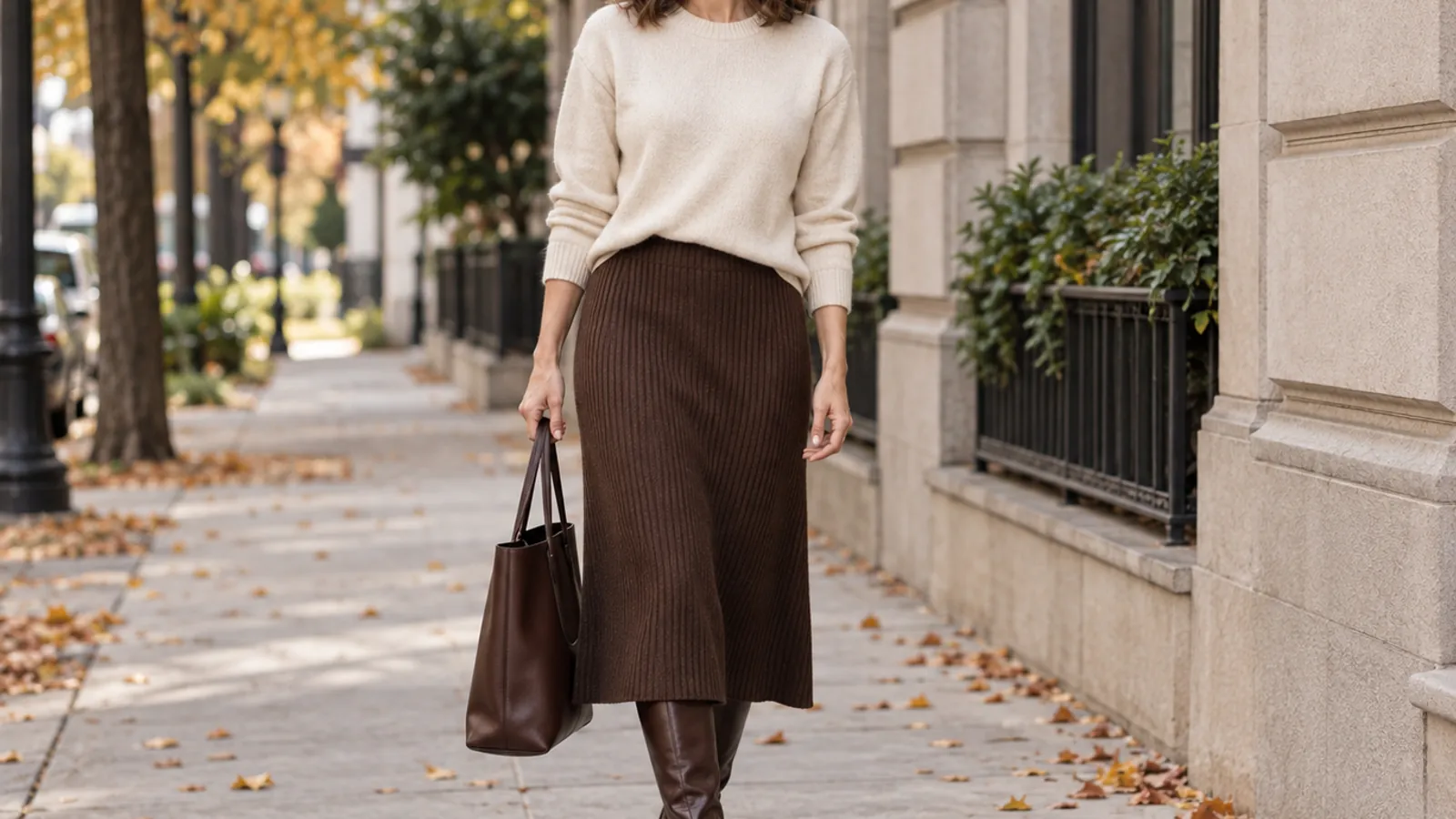
A knit skirt extends sweater comfort into a more dressed-up silhouette. Cream and chocolate provide gentle contrast, while tall boots close the gap at the hem and add warmth.
Avoid pairing two very bulky knits. A medium-weight skirt and sweater that can be lightly tucked keep the waist readable. A slip or lined skirt also prevents clinging.
How to build the formula
- Combine one light and one dark knit.
- Define the waist with a small front tuck.
- Let boots meet or disappear beneath the hem.
A useful formula for: Work, lunch and days when trousers feel too predictable.
3. Blazer + white tee + trousers + sneakers
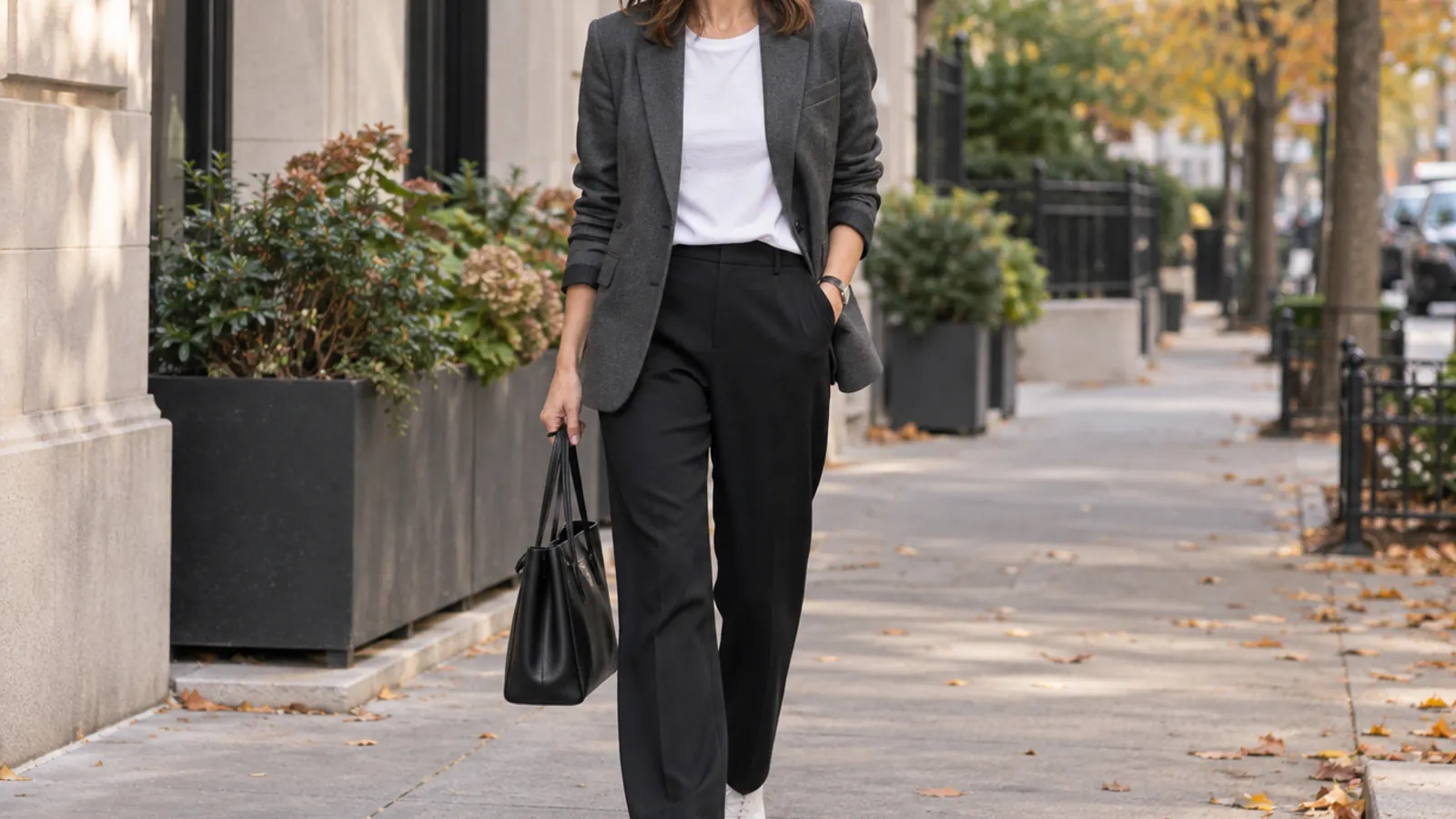
This high-low combination is practical because the tailoring looks intentional while the T-shirt and sneakers keep it comfortable. Charcoal and black create depth without the severity of an all-black suit.
The trouser hem should work with the actual sneaker height, and the blazer needs enough shoulder room for easy movement. A smooth, substantial T-shirt sits more neatly beneath tailoring.
How to build the formula
- Build a clean black-and-white base.
- Add a charcoal or checked blazer.
- Keep sneakers understated and well maintained.
A useful formula for: Creative offices, travel days and long walks between appointments.
4. Denim shirt + corduroy trousers
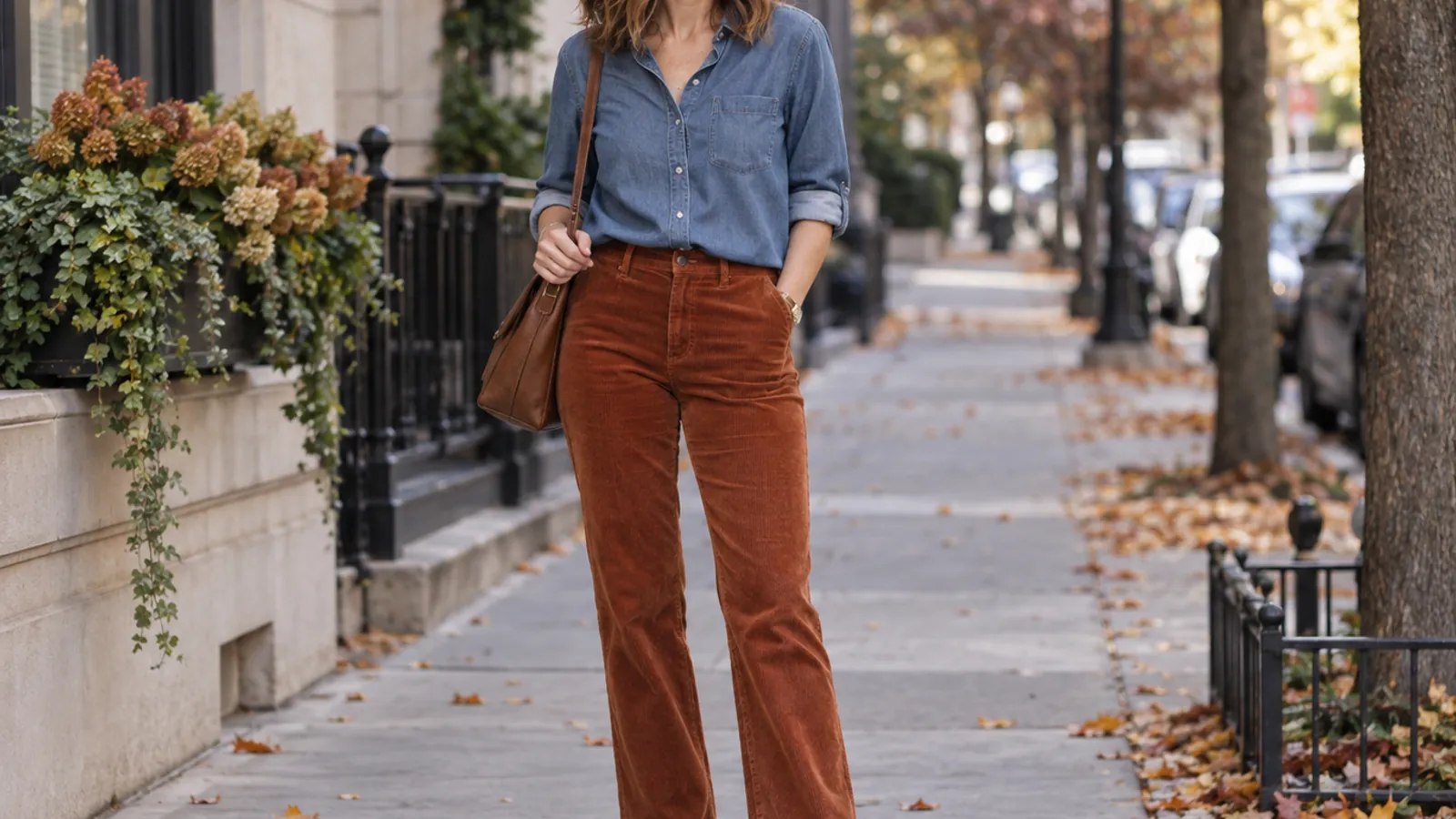
A denim shirt behaves like a neutral and makes colored trousers easier to style. Rust corduroy provides autumn character through both color and texture without requiring extra accessories.
Keep the denim medium or light so the two pieces remain distinct. Straight or gently wide corduroy trousers feel current and leave room for boots.
How to build the formula
- Tuck or half-tuck a soft denim shirt.
- Choose rust, olive or brown corduroy.
- Repeat a warm tone in boots or bag.
A useful formula for: Casual offices, weekend plans and transitional weather.
5. Cardigan + slip skirt + ankle boots
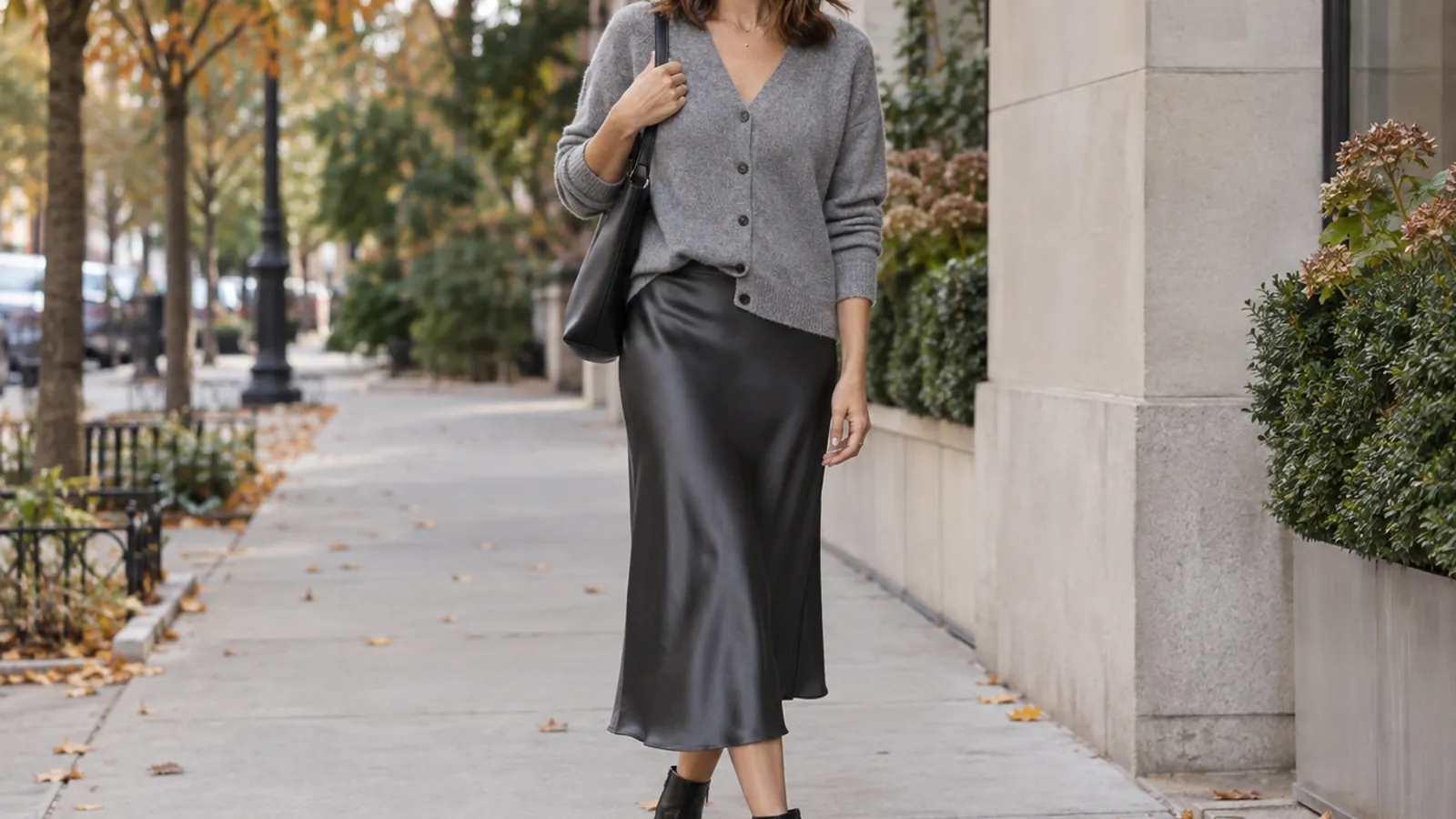
This outfit succeeds through texture rather than complicated color. A relaxed cardigan softens the shine of a slip skirt, while ankle boots make the skirt practical beyond summer.
If the cardigan is long, leave lower buttons open or tuck a small section to show the waist. On colder days, add thin tights and a coat with a clean, non-clinging lining.
How to build the formula
- Pair a matte cardigan with a fluid midi skirt.
- Show some waist without forcing a full tuck.
- Use boots to give the skirt autumn weight.
A useful formula for: Dinner, work and restyling a summer slip skirt.
6. Striped sweater + black jeans + colored flats
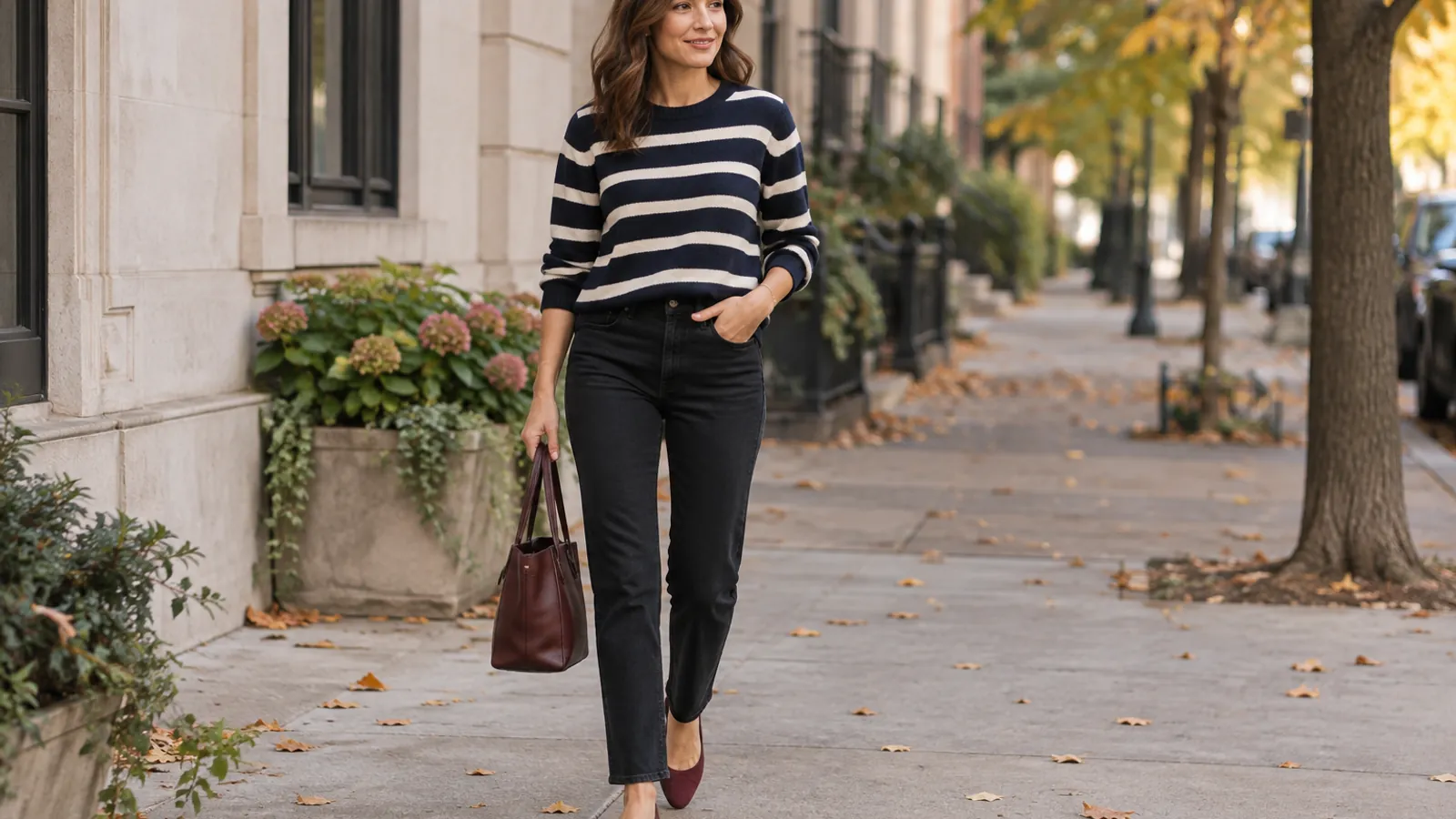
Stripes introduce pattern while behaving almost like a solid. Black jeans keep the outfit crisp, and burgundy flats make the familiar combination feel seasonal.
Match stripe scale to your preference rather than a rule: narrow stripes read quietly, while broad stripes become the focal point. A shorter sweater or simple tuck maintains leg length.
How to build the formula
- Choose a two-color striped knit.
- Ground it with straight black denim.
- Add one muted accent through shoes or a bag.
A useful formula for: Everyday errands, casual meetings and mild fall days.
7. Turtleneck + open shirt + wide trousers
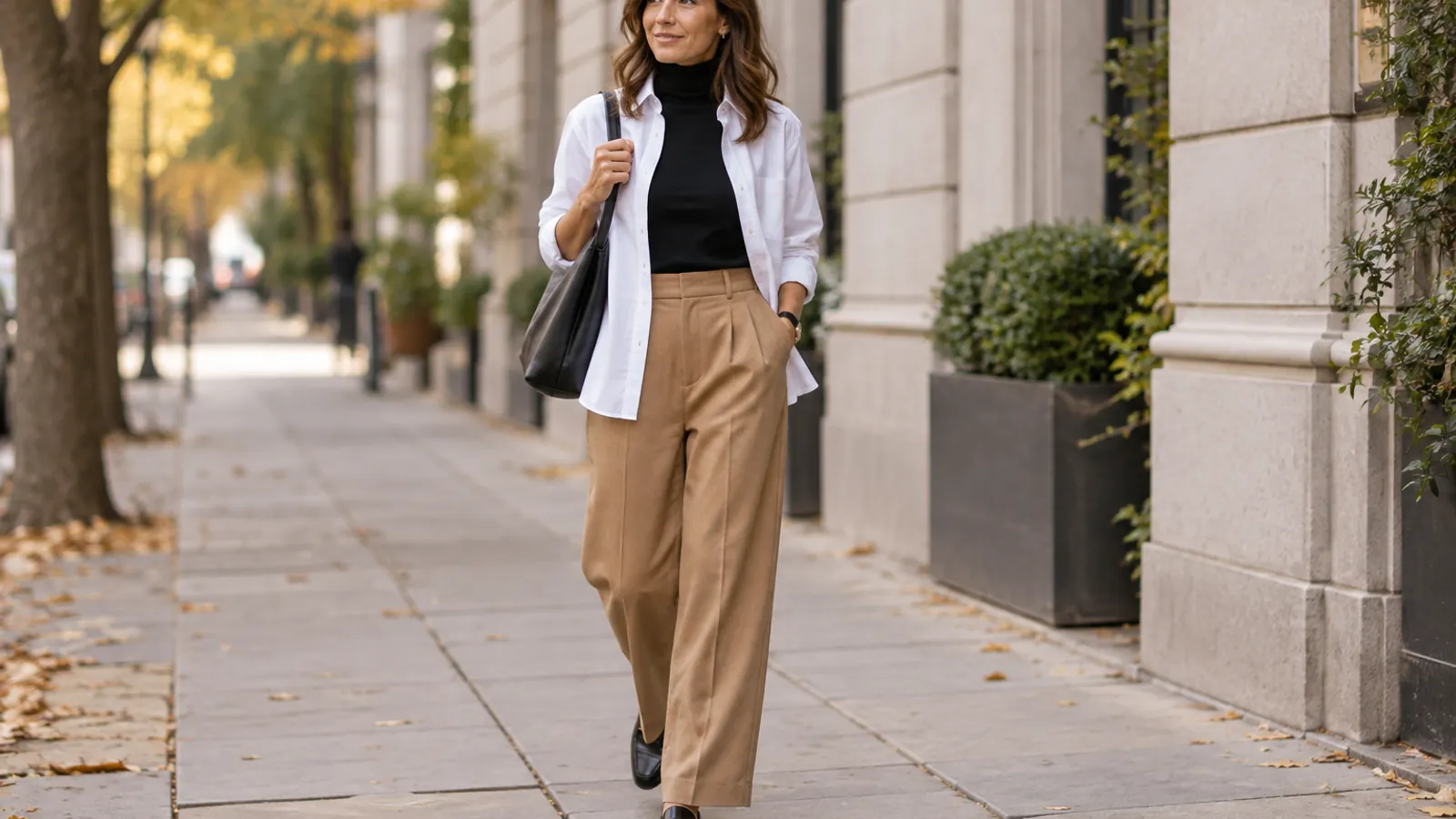
A fine turtleneck turns a white shirt into a lightweight jacket. The black-and-white top feels graphic, while camel trousers warm the palette and give the fitted upper layers room to breathe.
The base layer must be thin enough to avoid bunching under the shirt. Roll or push the shirt sleeves once so the outfit looks deliberately layered.
How to build the formula
- Begin with a close-fitting lightweight turtleneck.
- Wear a relaxed shirt open above it.
- Balance the top with fluid wide-leg trousers.
A useful formula for: Offices, indoor-outdoor days and extending shirts into cooler weather.
8. Utility jacket + knit midi dress
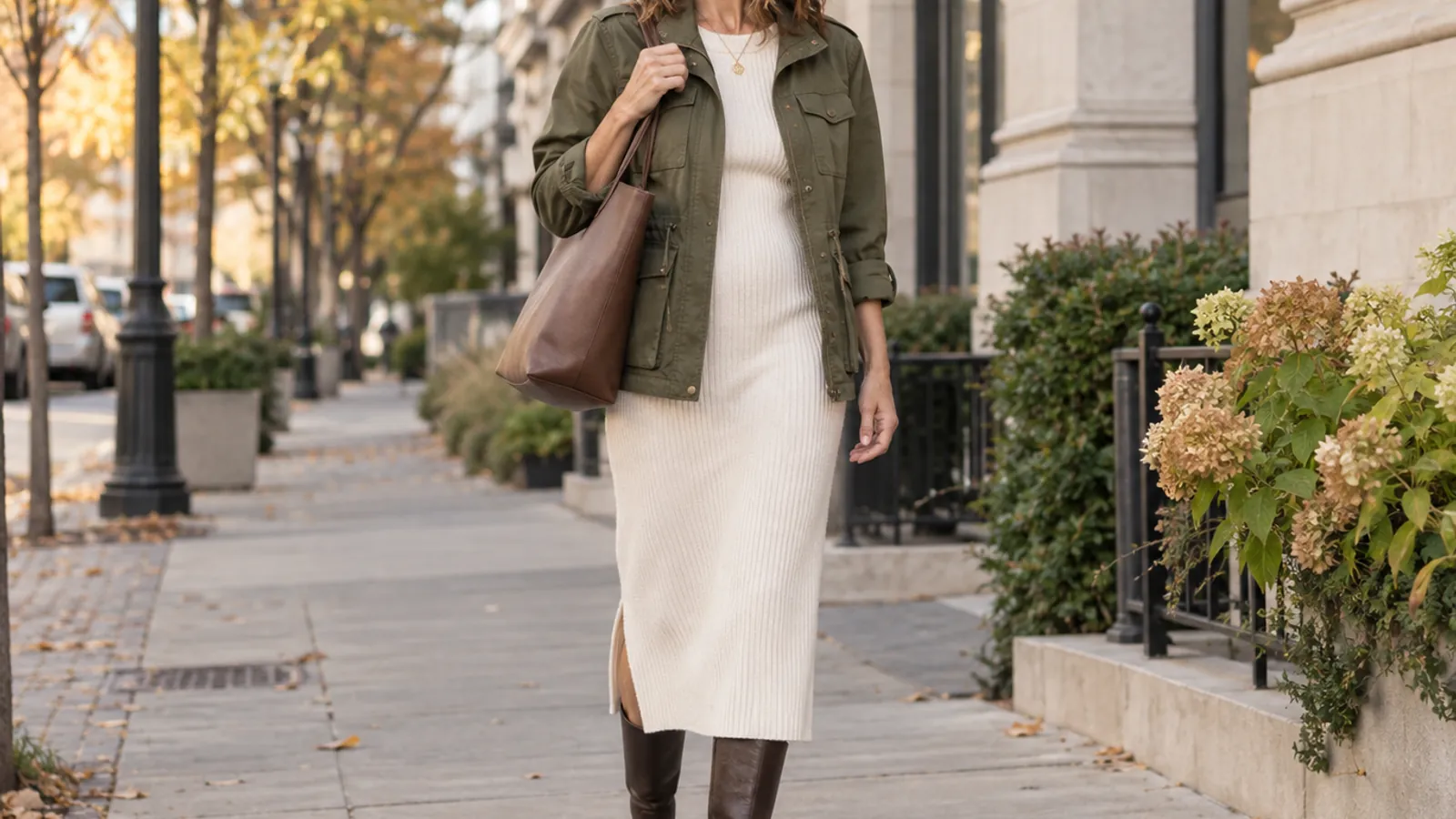
A column-shaped knit dress is an easy one-piece base, but it can feel overly simple alone. The cropped visual weight and pockets of a utility jacket make it practical and define the upper body.
Check that the dress allows a normal stride and does not cling beneath the jacket. Flat knee boots add coverage; ankle boots keep the formula lighter.
How to build the formula
- Choose a comfortable ribbed or smooth knit dress.
- Add an olive, tan or navy utility layer.
- Match footwear to temperature and walking needs.
A useful formula for: Weekend lunches, travel and low-effort one-piece dressing.
9. Leather jacket + white tee + vintage jeans
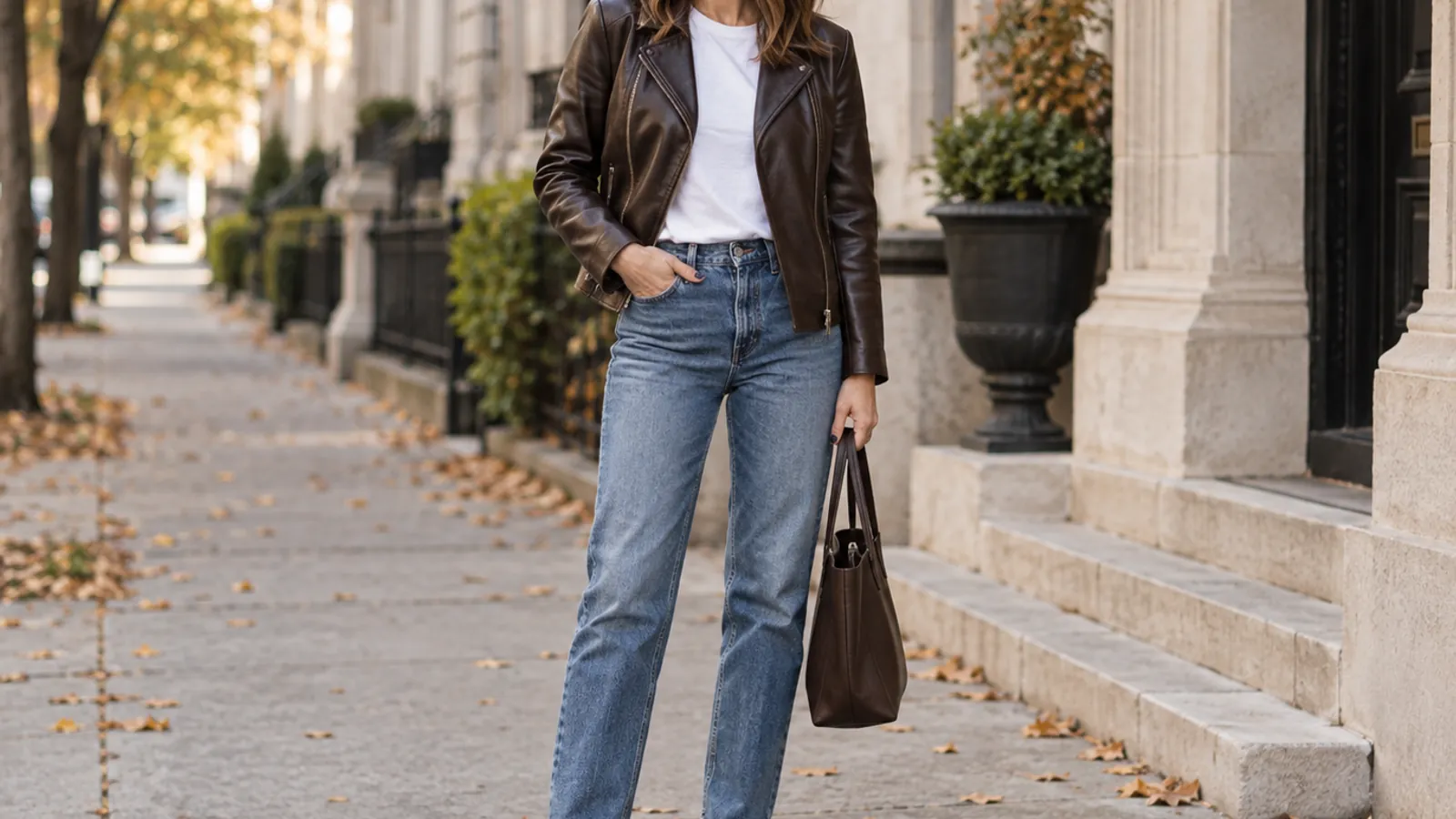
A leather jacket provides enough character that the remaining pieces can stay completely familiar. Dark brown feels softer than black and works naturally with faded blue denim.
The most versatile jacket ends near the hip and closes comfortably over a light knit. If leather is not part of your wardrobe, the same formula works with suede, waxed cotton or a structured dark overshirt.
How to build the formula
- Use a plain tee as the bright base.
- Add straight vintage-wash jeans.
- Finish with a cropped structured jacket and boots.
A useful formula for: Concerts, casual dinner and dependable weekend dressing.
10. Wool coat + sweatshirt + tailored trousers
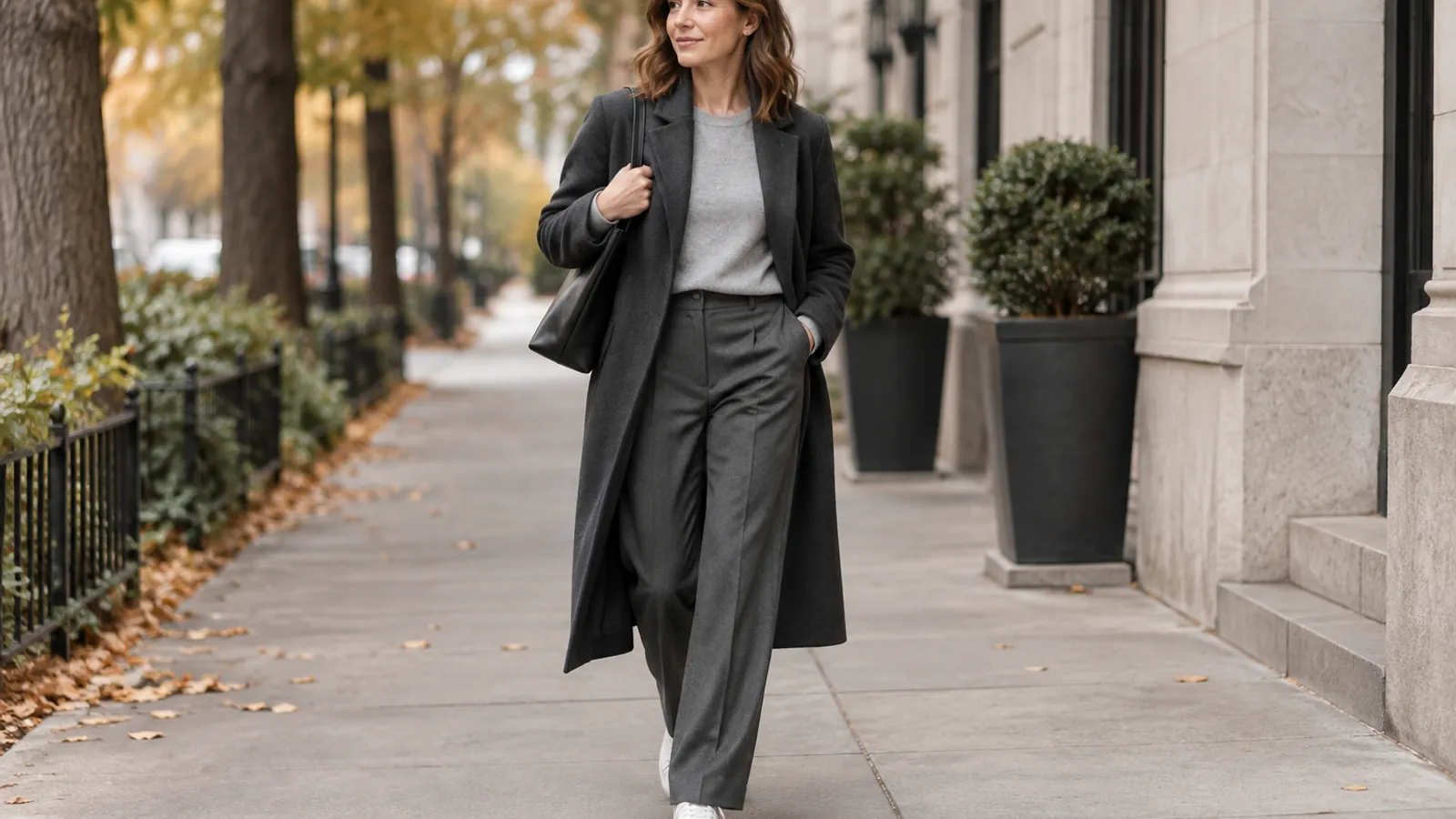
This formula keeps the comfort of leisurewear but replaces matching joggers with trousers and adds a strong outer layer. Closely related grays make the different levels of formality feel cohesive.
Keep the sweatshirt relatively smooth and avoid an overly tight coat sleeve. The trousers should break cleanly above the sneakers so the lower half does not pool.
How to build the formula
- Layer a plain sweatshirt under a long coat.
- Choose fluid or softly tailored trousers.
- Use simple low-profile sneakers.
A useful formula for: Travel, busy city days and cool-weather commuting.
Frequently asked questions
What are the most useful fall wardrobe staples?
A weather-appropriate coat, straight jeans, comfortable trousers, a white shirt, fine knitwear, practical boots and one versatile jacket support many repeatable outfits.
How do I layer without looking bulky?
Place thinner, closer-fitting pieces underneath and leave room in the outer layer. Show a cuff, waist or open vertical line so individual layers remain visible.
Do fall outfits need traditional autumn colors?
No. Black, navy, gray, denim and cream work throughout fall. Rust, olive, chocolate or burgundy can be added in one garment or accessory.
How can I adapt these outfits to warmer weather?
Use cotton instead of wool, choose unlined outerwear and remove the innermost layer. The same proportions can remain while fabric weight changes.
The images in this story were created with AI as original editorial visuals and reviewed to ensure that each image is relevant to the accompanying guidance.