
A good fall hair care routine is less about buying a completely new shelf of products and more about controlling the things that quietly increase dryness: hotter showers, indoor heating, repeated blow-drying and friction from seasonal layers. Hair cannot regulate its own moisture once it has grown from the scalp, so protecting the fiber you already have matters.
The four-part routine below works as a framework rather than a prescription. Fine straight hair, dense curls, bleached lengths and an oily scalp will not need identical formulas or the same wash schedule. Keep the method—gentle cleansing, consistent conditioning, controlled drying and friction protection—then adjust the amount and richness to your hair.
Persistent scalp burning, sores, heavy flaking, sudden shedding or breakage that does not improve with gentler handling deserves advice from a dermatologist or another qualified clinician. Cosmetic care can improve feel and manageability, but it should not be used to diagnose or hide a scalp condition.
To protect dry hair in cold weather, wash the scalp with lukewarm water, condition the lengths at every wash, blot instead of rubbing, use heat protectant with moderate heat, and reduce friction from coat collars, scarves and tight styles. Adjust product richness to your texture rather than layering on more of everything.
1. Make wash day gentler, not more complicated
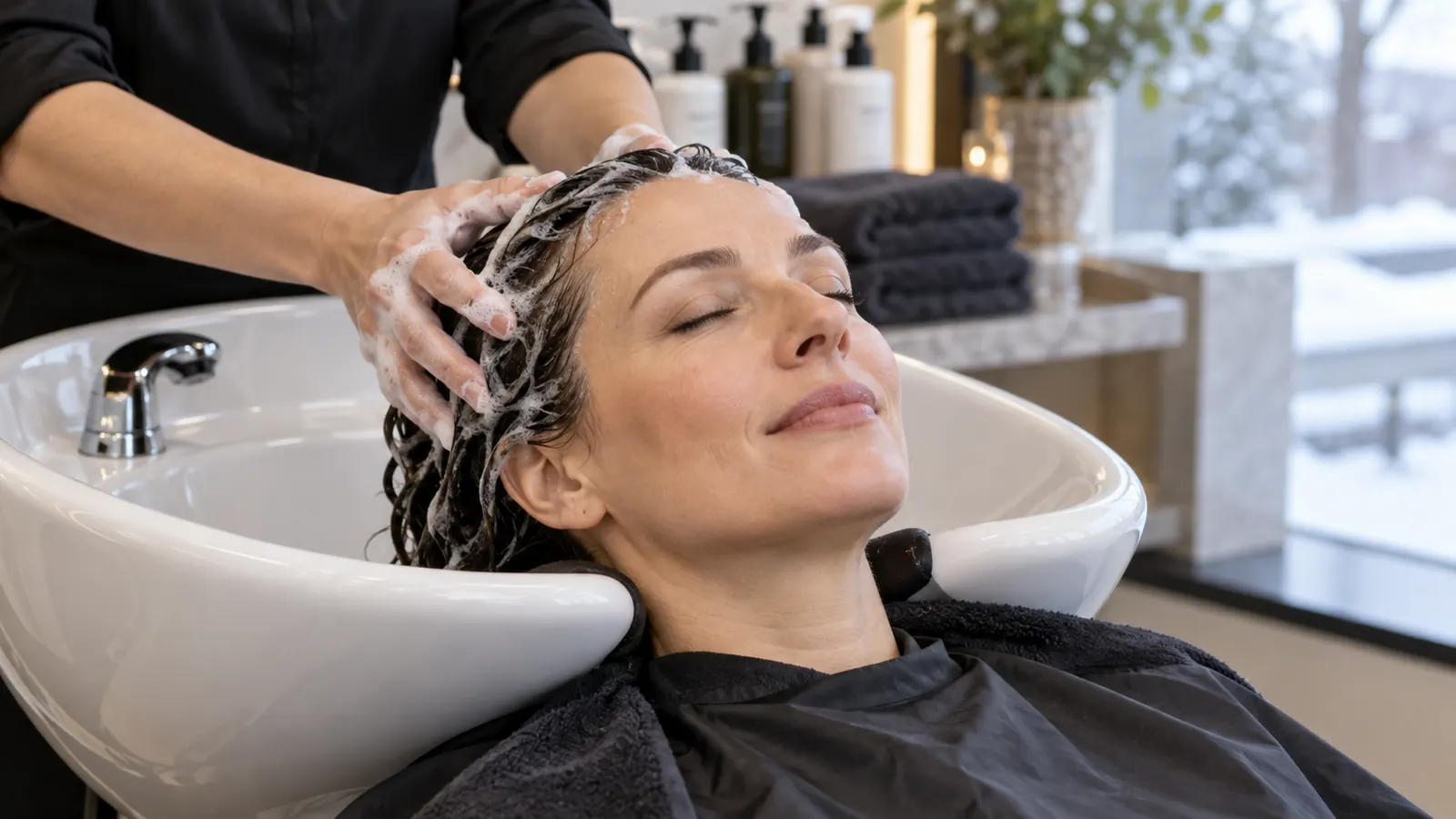
Cold outdoor air and heated rooms can make already-dry hair feel rougher, but the answer is not to coat the scalp in heavy products. Start by making the cleansing step less aggressive. Use comfortably warm rather than hot water, work shampoo mainly through the scalp, and avoid piling the lengths on top of the head. The foam that travels down during rinsing is usually enough for the ends.
Wash according to your scalp rather than a rigid seasonal schedule. Fine or oily hair may still need frequent cleansing, while coarse, curly or tightly coiled hair often feels better with more time between washes. If you use dry shampoo, styling cream or silicone-rich products, include a thorough cleanse when buildup makes the roots dull or the hair difficult to wet. A gentle routine should leave the scalp comfortable, not hidden under residue.
Detangle before washing if your texture allows it, then use fingertips instead of nails on the scalp. These small changes reduce unnecessary friction—the same friction that becomes more noticeable when scarves, coat collars and dry air are already working against the cuticle.
What to do
- Fully saturate the hair with lukewarm water before adding shampoo.
- Emulsify a small amount in your hands and massage it over the scalp with fingertips.
- Rinse downward without rubbing the ends together; repeat only when buildup requires it.
Especially useful for: Every hair type, especially lengths that feel rough while the scalp still becomes oily.
2. Condition the lengths every time you shampoo
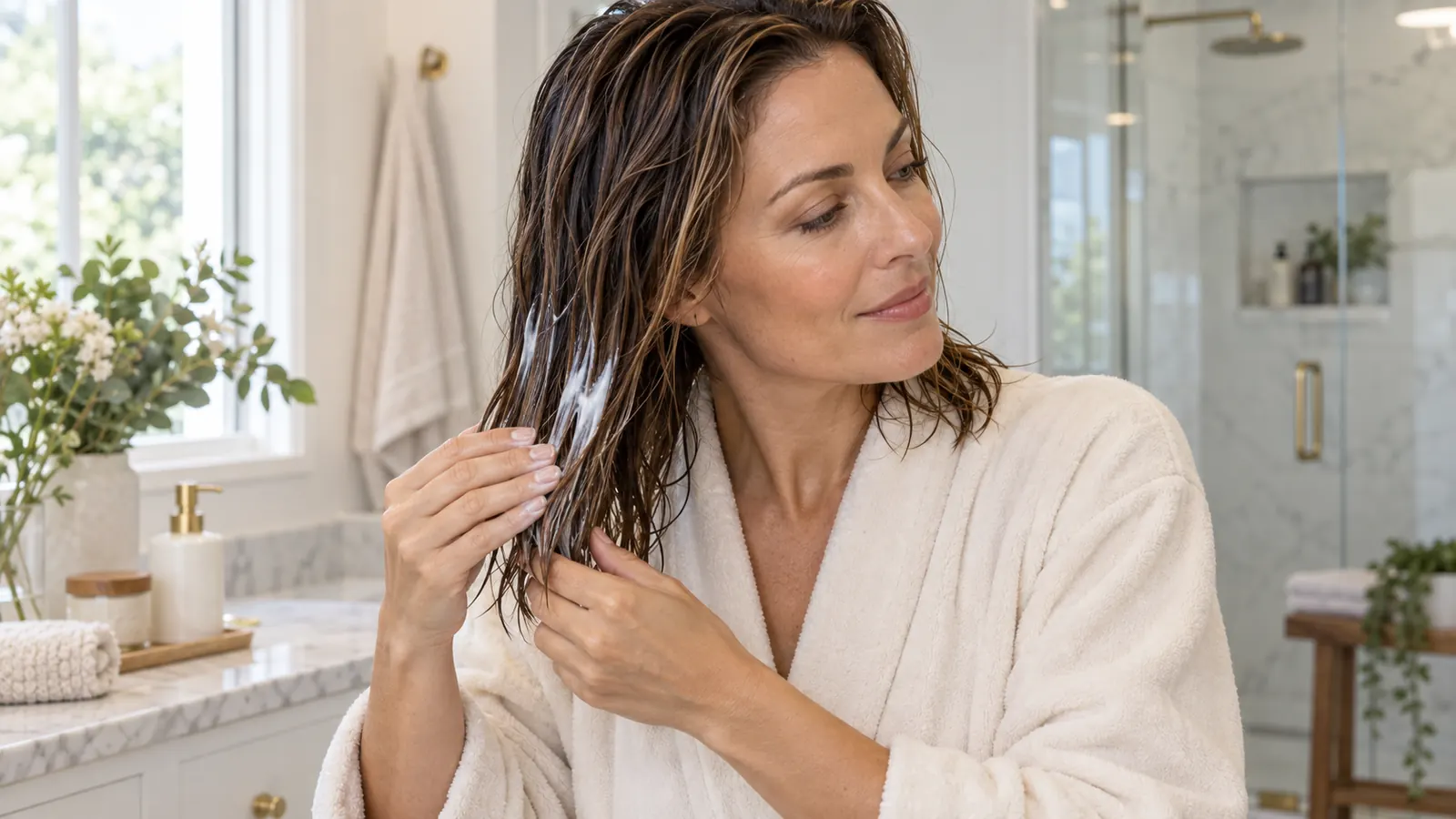
Conditioner is the consistent part of a useful fall hair care routine. Squeeze excess water from the lengths first so the formula does not slide straight off. Distribute it from the mid-lengths to the ends, using whatever remains on your hands closer to the roots only if your texture needs it. A wide-tooth comb or fingers can help spread the product, but work slowly because wet hair stretches more easily.
Choose the texture by result, not by season-themed marketing. Fine hair may prefer a light rinse-out conditioner, while coarse, bleached, curly or porous hair may benefit from a richer formula. Humectants help attract water, fatty alcohols add slip, and conditioning agents reduce static and make the surface feel smoother. Oils can help seal and soften, but oil alone does not replace water or a balanced conditioner.
Add a mask once a week only if your hair responds well to it. More is not automatically better: a heavy mask at every wash can flatten fine hair or leave buildup. Alternate moisture-focused care with your normal conditioner and evaluate the result after the hair is fully dry. Soft movement and easier detangling matter more than a coated feeling.
What to do
- Gently squeeze excess water from freshly shampooed hair.
- Smooth conditioner through mid-lengths and ends in sections.
- Leave it on for the label’s recommended time, detangle carefully and rinse well.
Especially useful for: Dry ends, color-treated hair, curls and anyone noticing more tangles as the weather cools.
3. Remove water gently and turn down the heat

Hair is vulnerable when wet, so rough towel drying can undo the care you added in the shower. Press out water with a soft microfiber towel or smooth cotton T-shirt instead of rubbing. Apply leave-in conditioner where needed, then use a heat protectant before any hot tool. These products cannot make unlimited heat harmless, but they can improve slip and reduce some of the stress created during styling.
Air-drying is not always the gentlest option if hair remains wet for many hours or you go outside before it is dry. A controlled blow-dry can be practical: choose low or medium heat, keep the dryer moving, direct airflow down the hair shaft and stop once the hair is dry. Curly hair can be diffused with low airflow to protect the pattern; straight or wavy hair can be dried in sections without pulling hard on the brush.
Save the highest heat for rare occasions, and avoid repeatedly passing an iron over the same section. If your ends look crisp immediately after styling, the setting or number of passes is probably too aggressive. A smoother finish should come from preparation and controlled technique rather than temperature alone.
What to do
- Press, rather than rub, wet hair with a microfiber towel or cotton T-shirt.
- Apply leave-in conditioner and heat protectant in light, even layers.
- Dry in sections on low or medium heat, keeping the nozzle moving and away from the hair.
Especially useful for: Anyone who blow-dries regularly or sees frizz and breakage around the ends and hairline.
4. Protect hair from scarves, static and dry indoor air
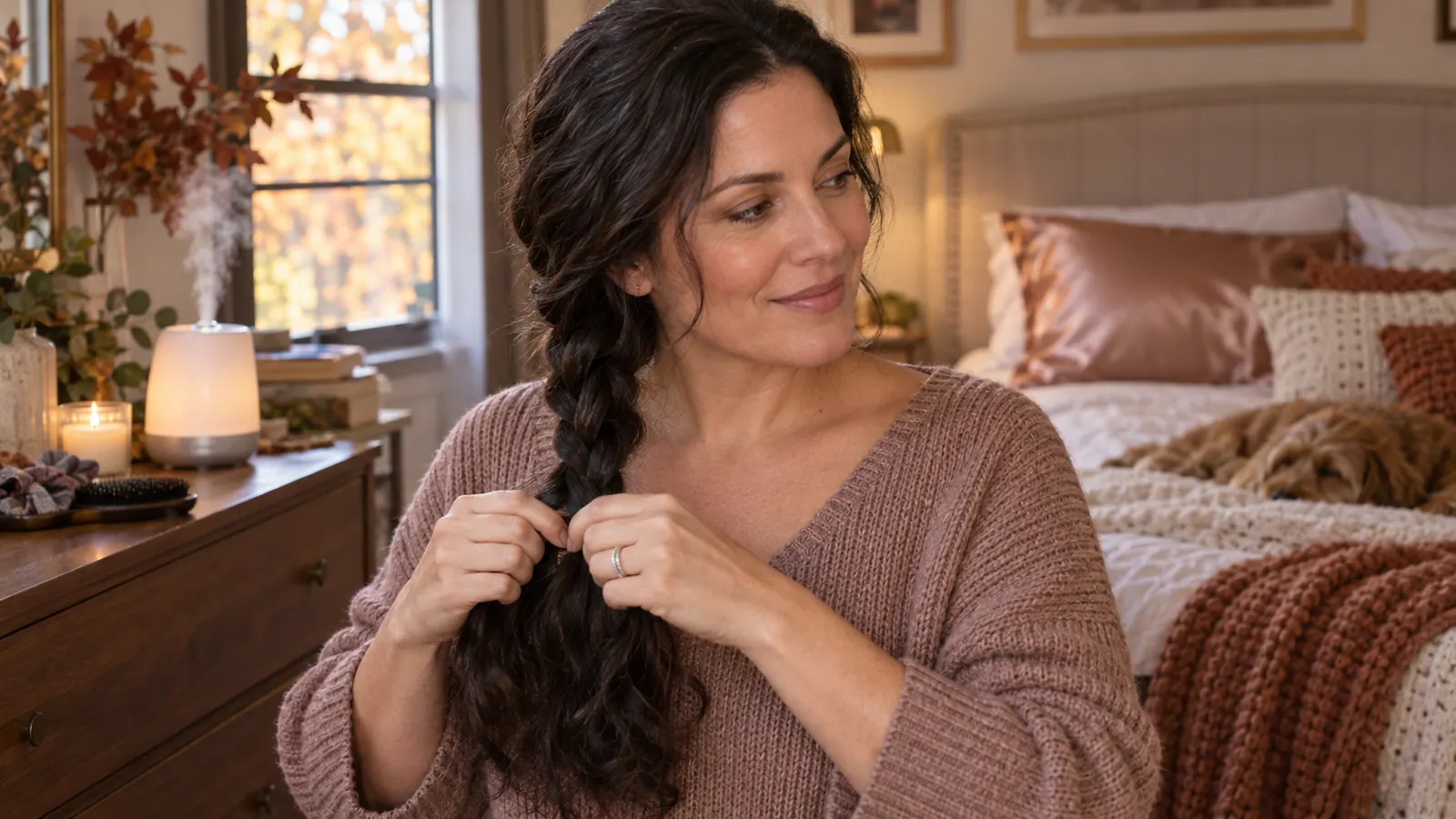
Fall damage often happens after styling. Wool scarves, high coat collars and hats repeatedly rub the same sections, while dry indoor air increases static. Before getting dressed, use a tiny amount of leave-in cream or lightweight serum over the ends, then choose a loose braid, low bun or soft ponytail that keeps vulnerable lengths from being trapped under a collar. Use fabric-covered elastics and change the placement instead of tightening the same spot every day.
Hats do not inherently damage hair, but a very tight fit, rough lining or putting one over damp hair can create friction and flatten the roots. A smooth lining helps, as does allowing hair to dry completely first. At night, a satin pillowcase or loose protective style may reduce tangling. If the room is uncomfortably dry, a clean, properly maintained humidifier can make the environment more comfortable, though it is not a substitute for conditioning care.
Finish with targeted product rather than adding oil everywhere. One or two drops warmed between the palms may be enough for the ends; fine hair may need even less. Schedule a trim when split ends continue traveling upward, because products can temporarily smooth a split but cannot permanently fuse it back together.
What to do
- Apply a small amount of leave-in or serum to the ends before adding outerwear.
- Use a loose, low-tension style and a soft elastic where collars would otherwise rub.
- At night, detangle gently and use a smooth pillowcase or loose braid if it helps your texture.
Especially useful for: Long hair, fragile ends and anyone dealing with scarf friction, tangles or winter static.
Frequently asked questions
How often should I wash dry hair in fall and winter?
Wash often enough to keep your scalp comfortable and free of buildup. There is no universal schedule: an oily scalp may need frequent cleansing, while coarse or curly hair may prefer longer intervals. Change the technique and conditioner before forcing a dramatic change in frequency.
Is hair oil or leave-in conditioner better for dry hair?
They do different jobs. A leave-in conditioner adds slip and conditioning ingredients, while a small amount of oil or serum helps smooth the surface and reduce moisture loss. Many dry lengths benefit from leave-in first and a tiny amount of oil only on the ends.
Does cold weather cause hair loss?
Cold and dry conditions can make hair feel brittle and may increase breakage or scalp discomfort, but noticeable shedding can have many causes. If shedding is sudden, patchy, prolonged or accompanied by scalp symptoms, seek qualified medical advice rather than assuming the weather is responsible.
Why does my hair get static when the heat comes on?
Dry air and friction make it easier for an electrical charge to build on the hair surface. Consistent conditioning, a small amount of leave-in product, smooth fabrics and avoiding over-drying usually help more than repeatedly brushing the hair.
Can wearing a hat damage my hair?
A hat is unlikely to harm healthy hair by itself. Problems are more often linked to a tight fit, rough lining, damp hair or repeated rubbing in one place. Choose a comfortable fit, smooth lining and low-tension style underneath.
Anna reviewed the article for clarity, image relevance, realistic expectations and alignment with the Lively Edit editorial policy. Safety and health claims are checked against appropriate authoritative sources; the updated date changes only after a meaningful review.
Read our editorial process →The images in this story were created with AI as original editorial visuals and reviewed to ensure that each image is relevant to the accompanying guidance.