Chocolate brown nails behave like a fall neutral: they coordinate with camel, denim, black, cream and burgundy while still feeling more intentional than beige. The difference between a flattering brown and a muddy one is usually undertone and depth, so compare swatches in daylight whenever possible.
The seven ideas below cover light, medium and dark finishes plus two understated nail-art options. Keep the cuticle line precise, apply dark shades in thin coats and protect the result with top coat. If you remove dark polish at home, press remover against the nail briefly before wiping to reduce staining around the skin.
Milky mocha is the softest everyday option, medium cocoa is the most versatile, and espresso gives the drama of a dark manicure without reading as flat black. For nail art, try a chocolate micro-French or a tonal set using several related browns.
1. Milky mocha
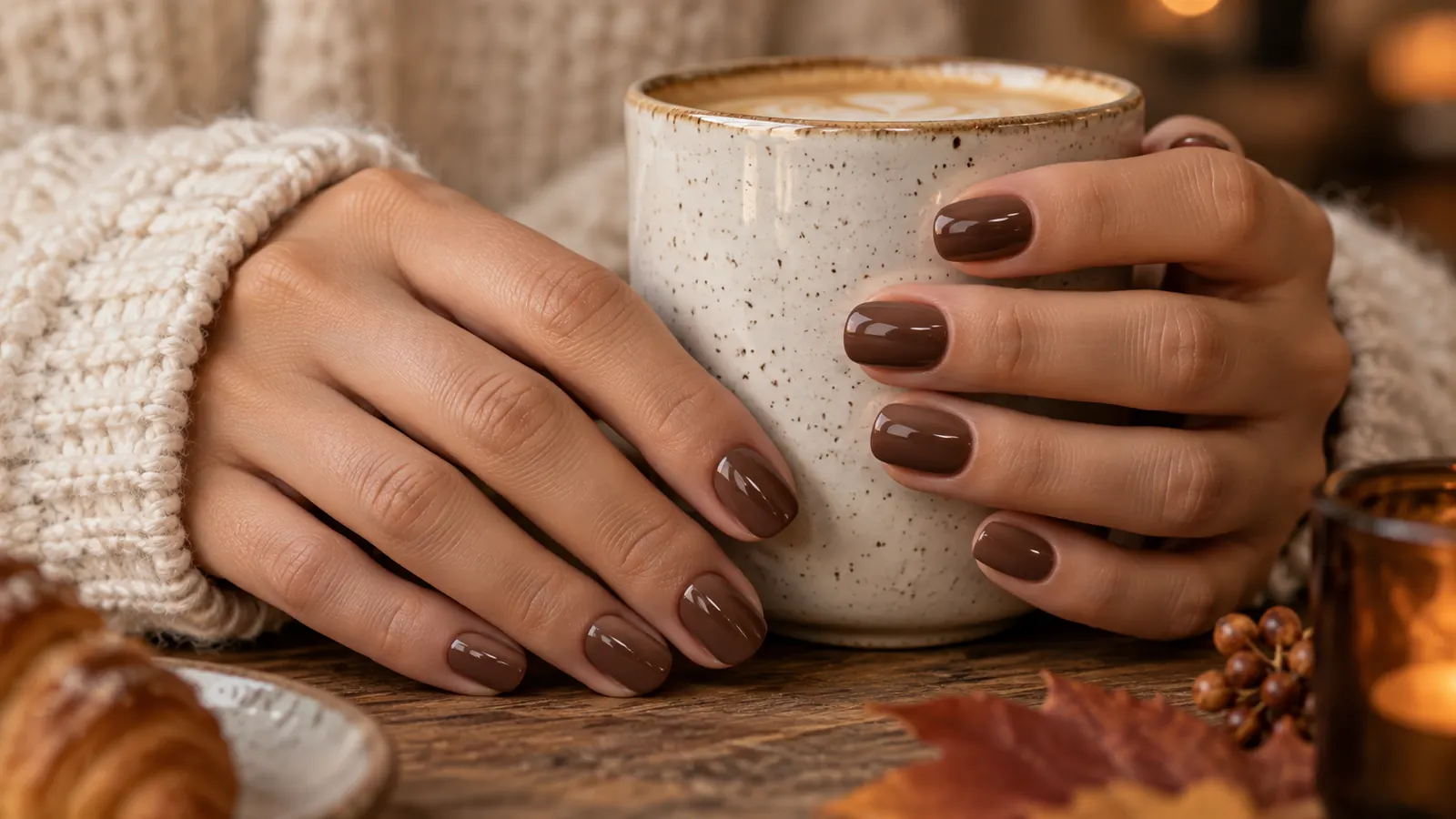
Milky mocha is a light chocolate shade softened with beige. It is less stark than espresso and more seasonal than a pale nude-style neutral, making it an easy entry point for anyone unsure about brown polish.
Look for a balanced latte tone that remains visibly brown in natural light. Two thin coats preserve a creamy appearance; a third may make some formulas look flatter and more opaque.
A glossy finish suits short oval nails especially well. Pair it with gold or silver jewelry according to your preference—the shade is quiet enough to support either.
How to ask for it
- Compare the swatch with your usual beige neutral.
- Apply two thin even coats.
- Finish with a glassy top coat and cap the free edge.
Best suited to: Short nails, conservative workplaces and people trying brown polish for the first time.
2. Classic cocoa brown

Cocoa brown sits in the center of the palette and is arguably the most versatile choice. It has enough depth to contrast with skin and enough warmth to avoid looking black indoors.
Choose a formula with an even cream finish. Medium browns can expose streaks if coats are too thick, so load the brush lightly and leave time between layers.
The shade looks modern on a compact squoval shape, where the straight edge balances its softness. It also pairs naturally with camel coats and blue denim.
How to ask for it
- Shape nails consistently before polishing.
- Use a smoothing base if the nail plate has ridges.
- Apply color in thin strokes and seal with top coat.
Best suited to: Everyday wear and anyone who wants one brown that works across most fall outfits.
3. Deep espresso
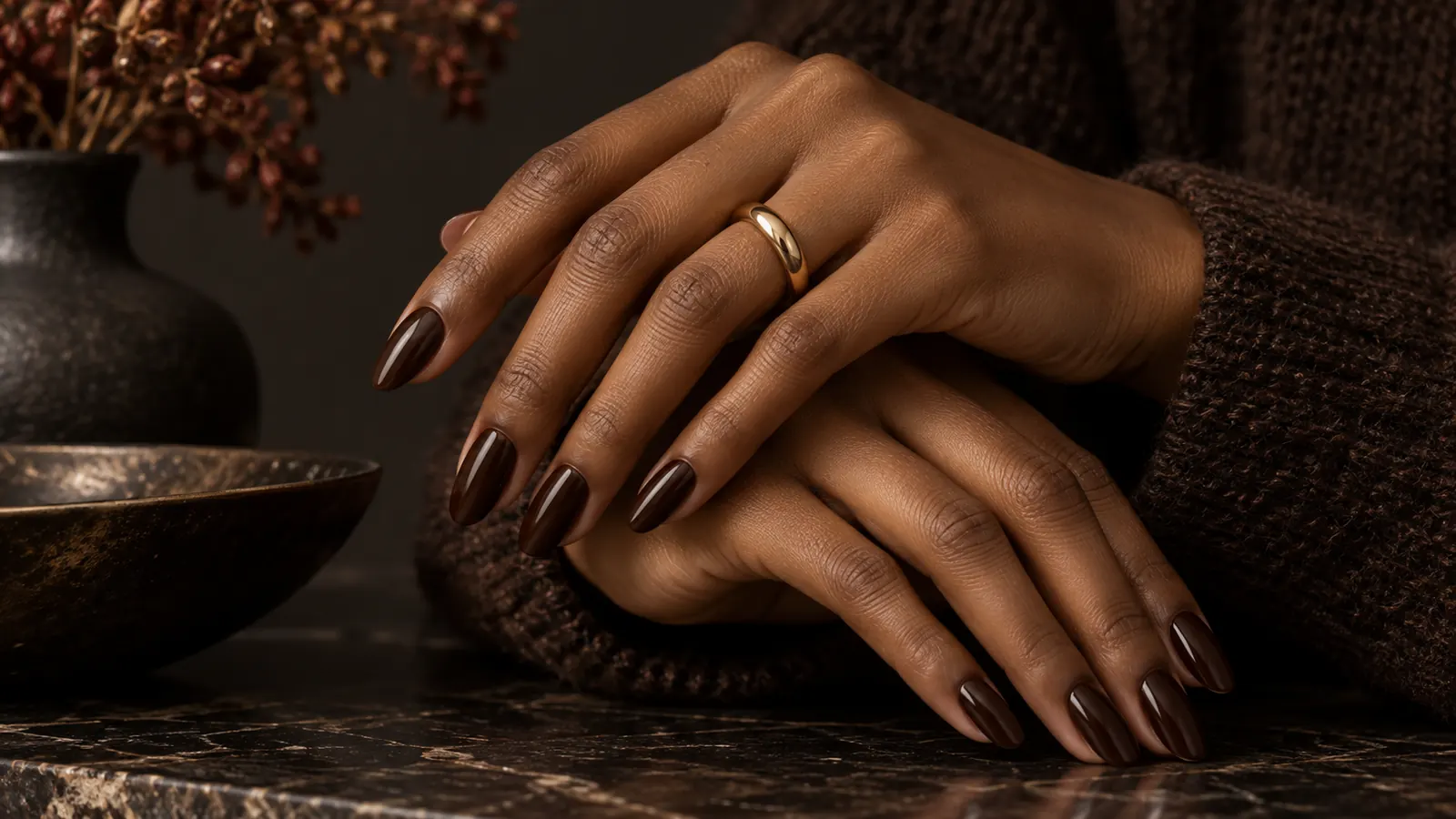
Espresso is the dramatic end of chocolate brown. In low light it can appear almost black, but daylight reveals warmth and gives the manicure more dimension than an opaque black cream.
Check the first coat: a true espresso should show brown at the edges. Keep the cuticle line especially clean because dark color makes uneven application more visible.
High gloss emphasizes depth; a matte finish makes the shade resemble suede. If nails are long, a rounded almond silhouette prevents the color from feeling too severe.
How to ask for it
- Use a protective base coat.
- Paint two thin coats with a narrow margin at the cuticle.
- Clean edges before applying top coat.
Best suited to: Evening looks, almond shapes and anyone who likes dark manicures.
4. Warm cinnamon chocolate
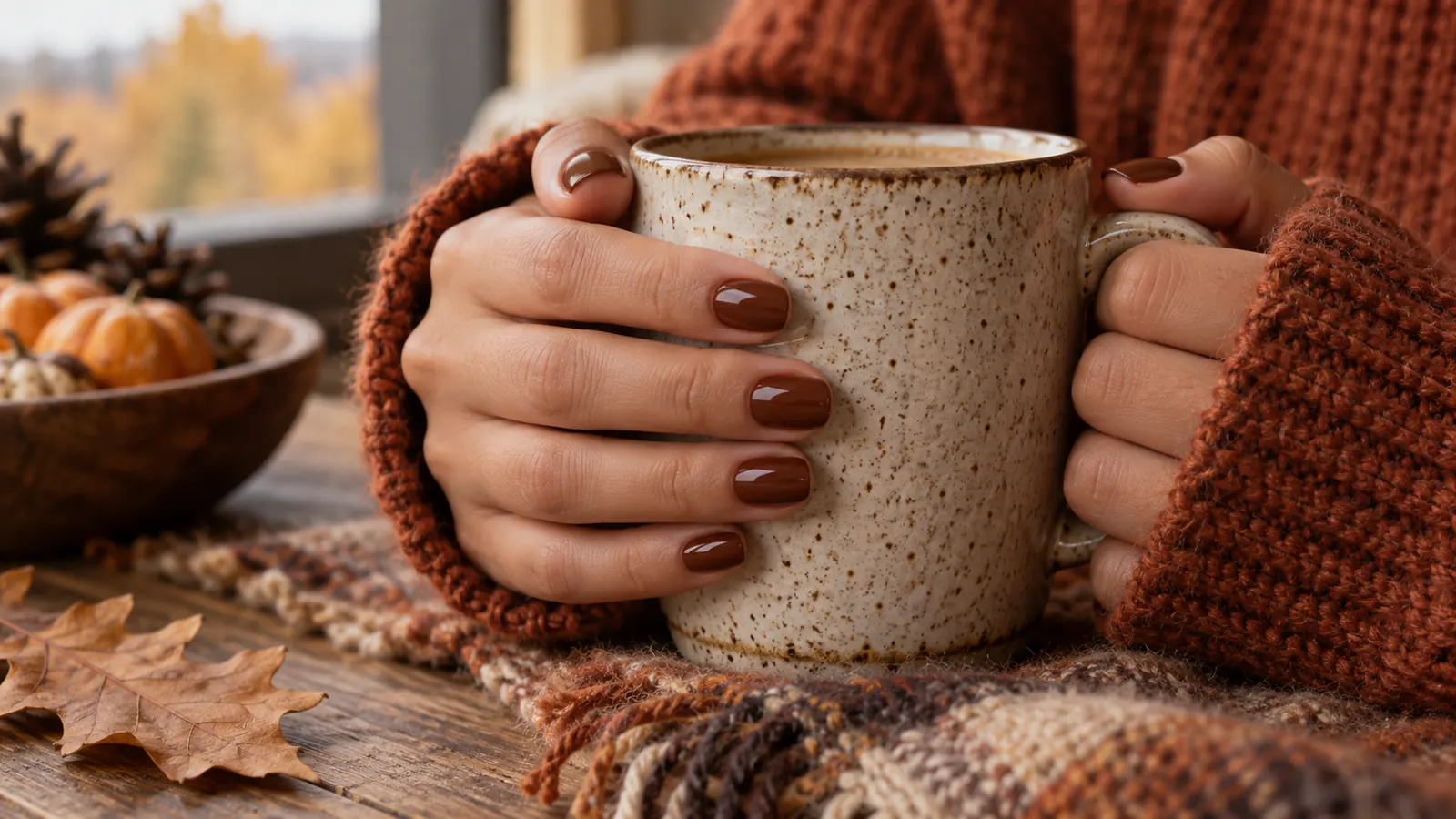
Cinnamon chocolate includes a subtle red or terracotta note. It feels lively beside rust, olive and cream and can be more flattering than a cool brown when your wardrobe leans warm.
Compare it with burgundy: the polish should still read brown first. A rounded nail shape reinforces the shade’s approachable, classic mood.
Avoid judging the bottle alone because red-brown pigments often deepen after the second coat. Test a swatch and view it in indoor and outdoor light.
How to ask for it
- Swatch before committing to confirm the brown base.
- Apply two balanced coats.
- Pair with a rounded or oval shape for softness.
Best suited to: Warm autumn palettes and anyone choosing between terracotta and traditional brown.
5. Cool taupe chocolate
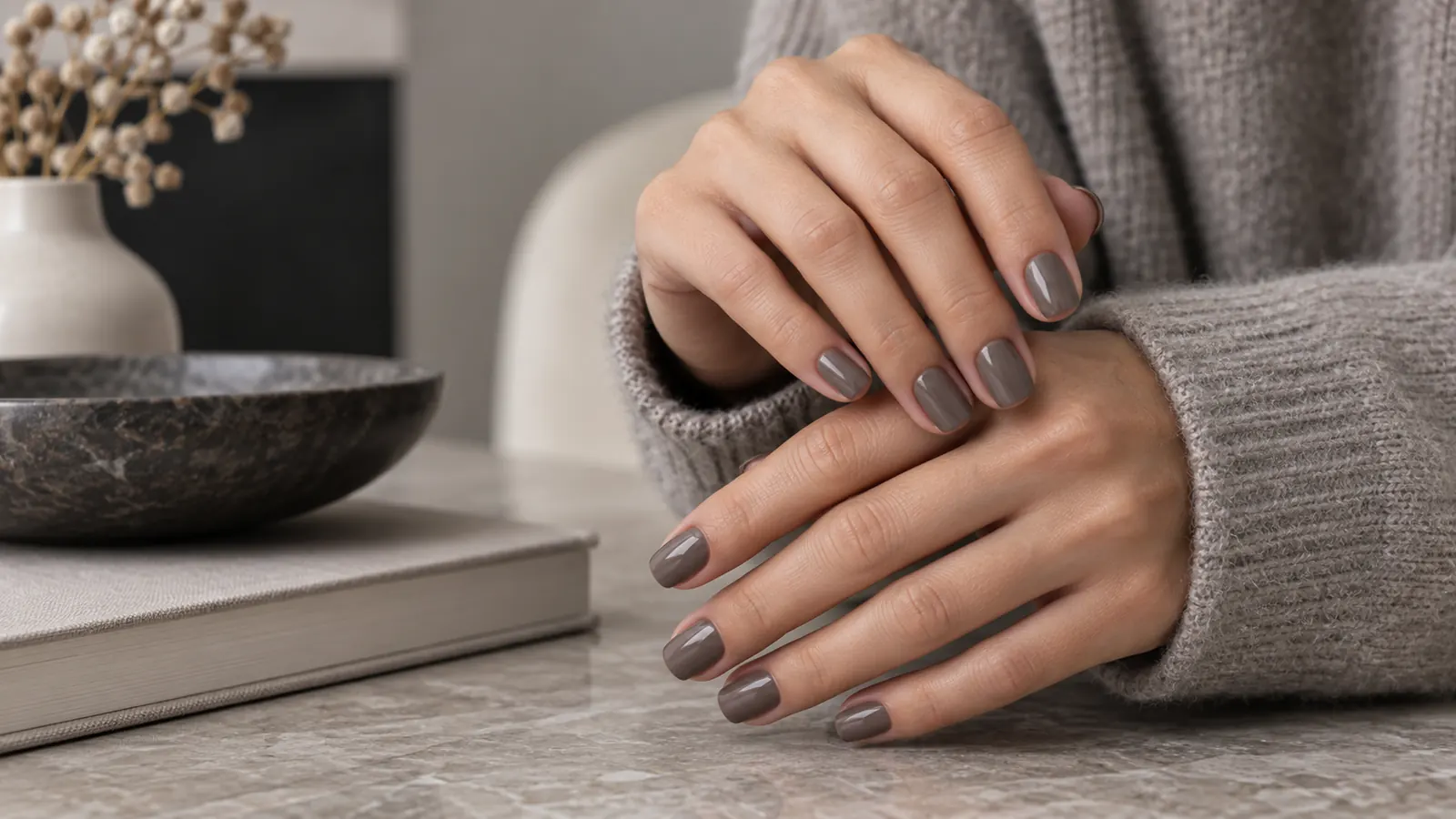
A cool taupe-brown contains a whisper of gray, creating a quieter version of chocolate. It is useful when warm caramel shades clash with the colors you wear most often.
Choose enough depth to keep the manicure from appearing chalky. A clean square or squoval shape suits its modern, understated character.
This shade can shift dramatically under warm indoor bulbs, so daylight is the best place to evaluate it. Silver-toned jewelry and charcoal knitwear make its cool balance especially visible.
How to ask for it
- Compare swatches beside gray and classic brown.
- Keep the nail shape crisp but not sharp.
- Use gloss to prevent the muted color looking flat.
Best suited to: Cool-toned wardrobes, short nails and minimal style.
6. Chocolate French tips
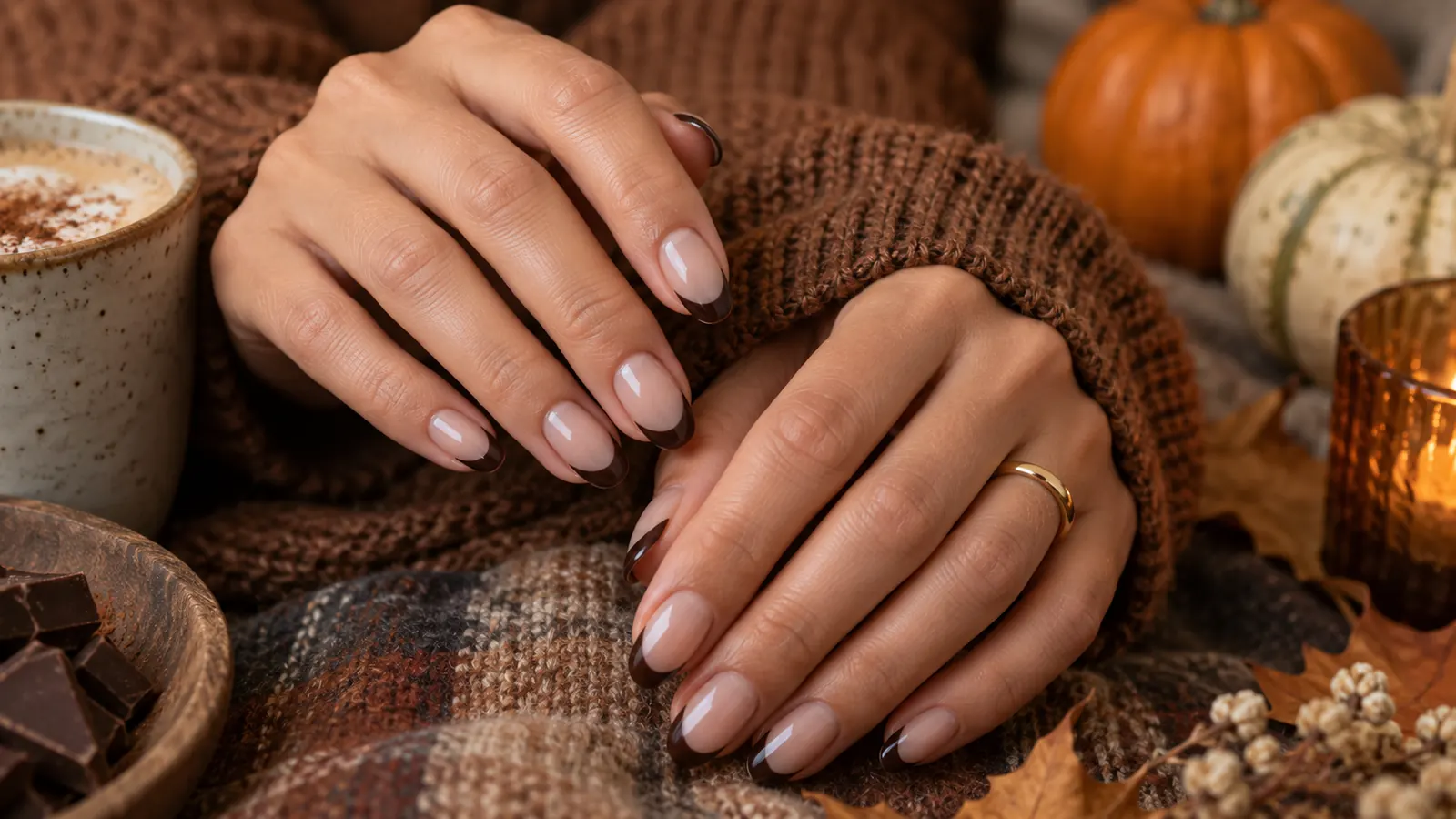
Chocolate French tips introduce fall color while leaving much of the nail visually light. The design grows out gracefully and works on shorter lengths when the line remains fine.
Use a transparent pale-pink base and choose a tip width that follows the free edge. A deep cocoa line is easier to see than milky brown without requiring a thick band.
Symmetry matters more than absolute perfection. View all nails together and balance the visual curve rather than correcting one line repeatedly until it becomes too wide.
How to ask for it
- Apply and fully dry the sheer base.
- Paint a narrow cocoa curve along each free edge.
- Correct with a small brush and finish with top coat.
Best suited to: Minimal nail art, weddings in fall and anyone who wants softer grow-out.
7. A tonal chocolate set
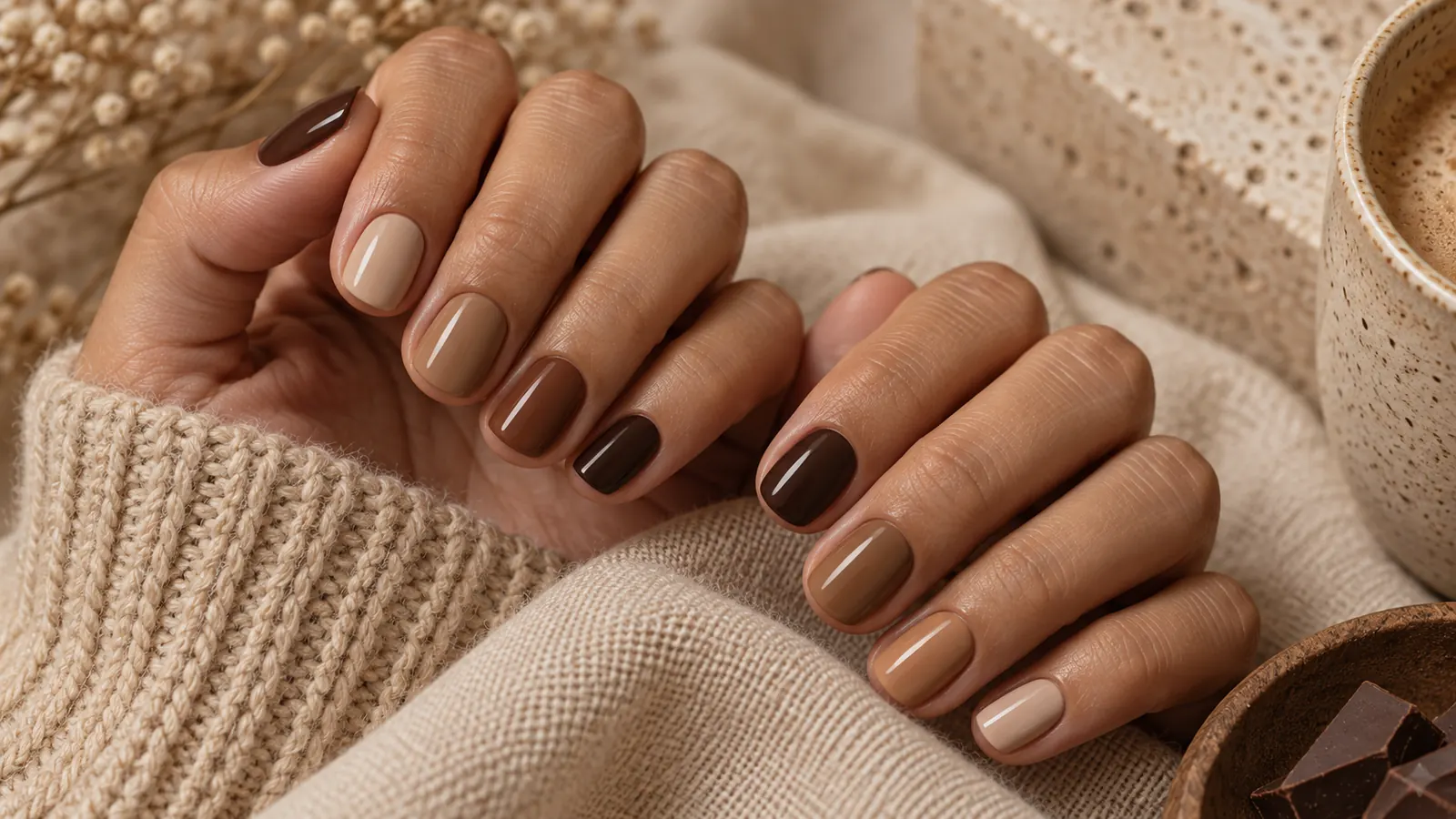
A tonal manicure assigns a different brown depth to each nail, moving from latte through cocoa to espresso. The repetition of one color family keeps it sophisticated rather than playful.
Choose shades with compatible undertones. Mixing very warm caramel with a strongly gray taupe can make the set feel accidental; a gradual progression is more cohesive.
Arrange bottles before painting and decide whether the gradient runs light-to-dark across each hand or mirrors from the center. Both work, but consistency makes the idea clear.
How to ask for it
- Select three to five browns with one undertone family.
- Plan the order before opening bottles.
- Use the same glossy top coat across every shade.
Best suited to: Anyone who cannot choose one brown and wants subtle nail art without drawing motifs.
Frequently asked questions
Are brown nails still neutral?
Most chocolate browns function like a neutral because they pair easily with black, navy, denim, cream and camel. The undertone determines whether the effect feels warmer or cooler.
Which brown is best for short nails?
Milky mocha, cocoa and taupe-brown are especially easy on short nails. Espresso also works beautifully when the edges and cuticle line are precise.
How do I prevent dark brown polish from staining?
Use a base coat, avoid flooding the cuticle and remove polish by holding remover on the nail before wiping outward. Follow the product instructions and stop if the surrounding skin becomes irritated.
Anna reviewed the article for clarity, image relevance, realistic expectations and alignment with the Lively Edit editorial policy. Safety and health claims are checked against appropriate authoritative sources; the updated date changes only after a meaningful review.
Read our editorial process →The images in this story were created with AI as original editorial visuals and reviewed to ensure that each image is relevant to the accompanying guidance.