Minimal nail art is less about using fewer products than making one decision clearly. A fine line, balanced dot or single accent can feel more polished than several competing motifs, and the negative space allows grow-out to look softer.
These designs are intended as visual references for a nail professional or careful home manicure. Work in thin layers, allow each stage to dry and simplify the design further if your nails are very short. Clean preparation and a smooth top coat are what make restrained art look deliberate.
For the most versatile minimal autumn nails, use a transparent pale-pink or warm beige base and add one controlled detail: rust dots, cocoa micro-tips, a single gold leaf accent, olive half moons, terracotta lines or one burgundy nail.
1. Tiny rust dots
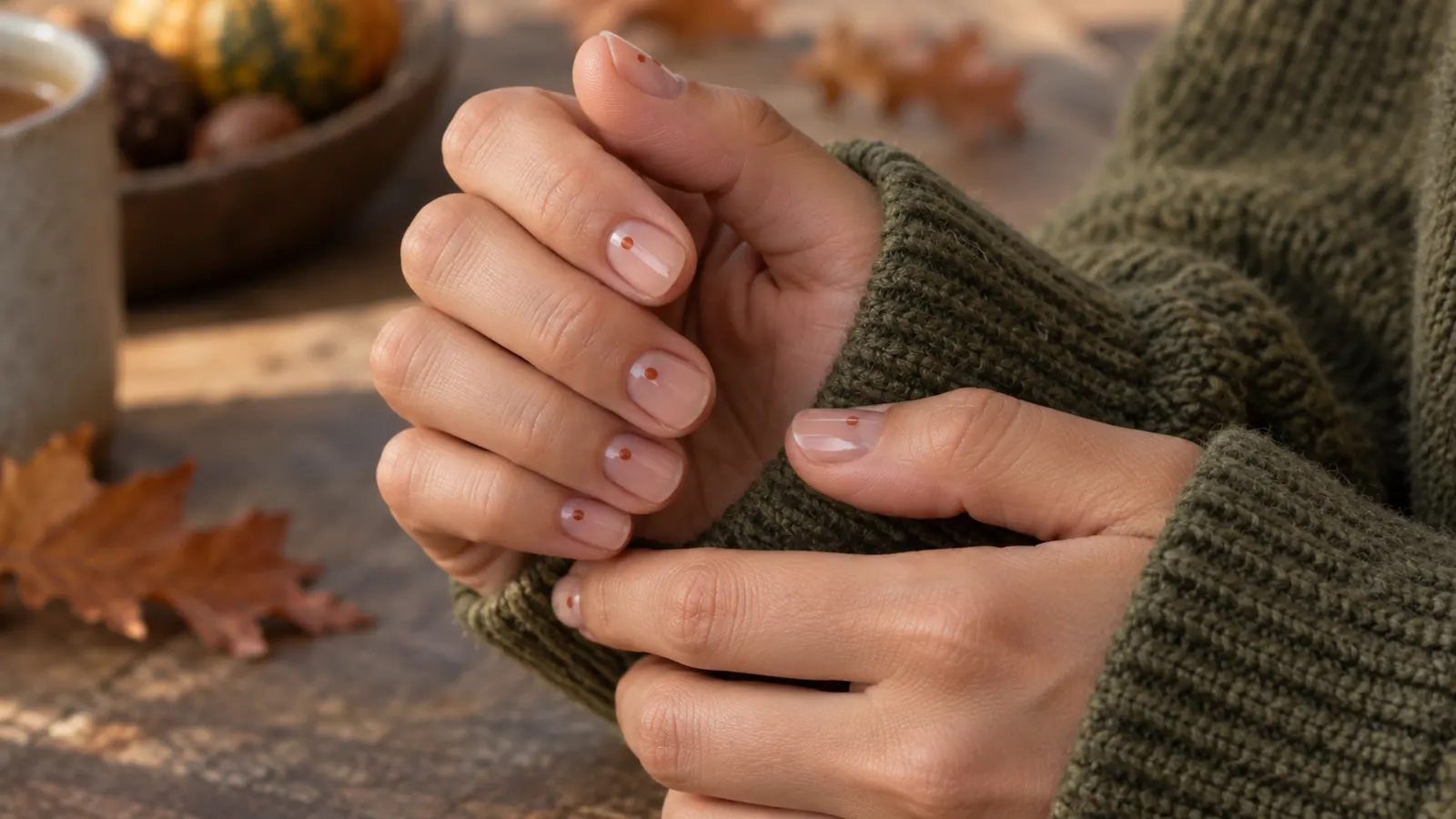
Rust dots are the lowest-commitment design in this edit. The warm color feels seasonal, while the scale keeps the manicure appropriate for settings where elaborate art would feel distracting.
Place one dot near the center of each cuticle using a dotting tool or the rounded end of a clean pin. Keep the size consistent and leave generous negative space.
A transparent pale-pink base makes small imperfections less visible. Let the dots dry before top coat so the brush does not drag pigment into a streak.
Simple method
- Apply a sheer base and let it dry.
- Place one small rust dot near each cuticle.
- Seal gently with a floating layer of top coat.
Works well for: Very short nails, beginners and conservative dress codes.
2. Chocolate micro-French tips
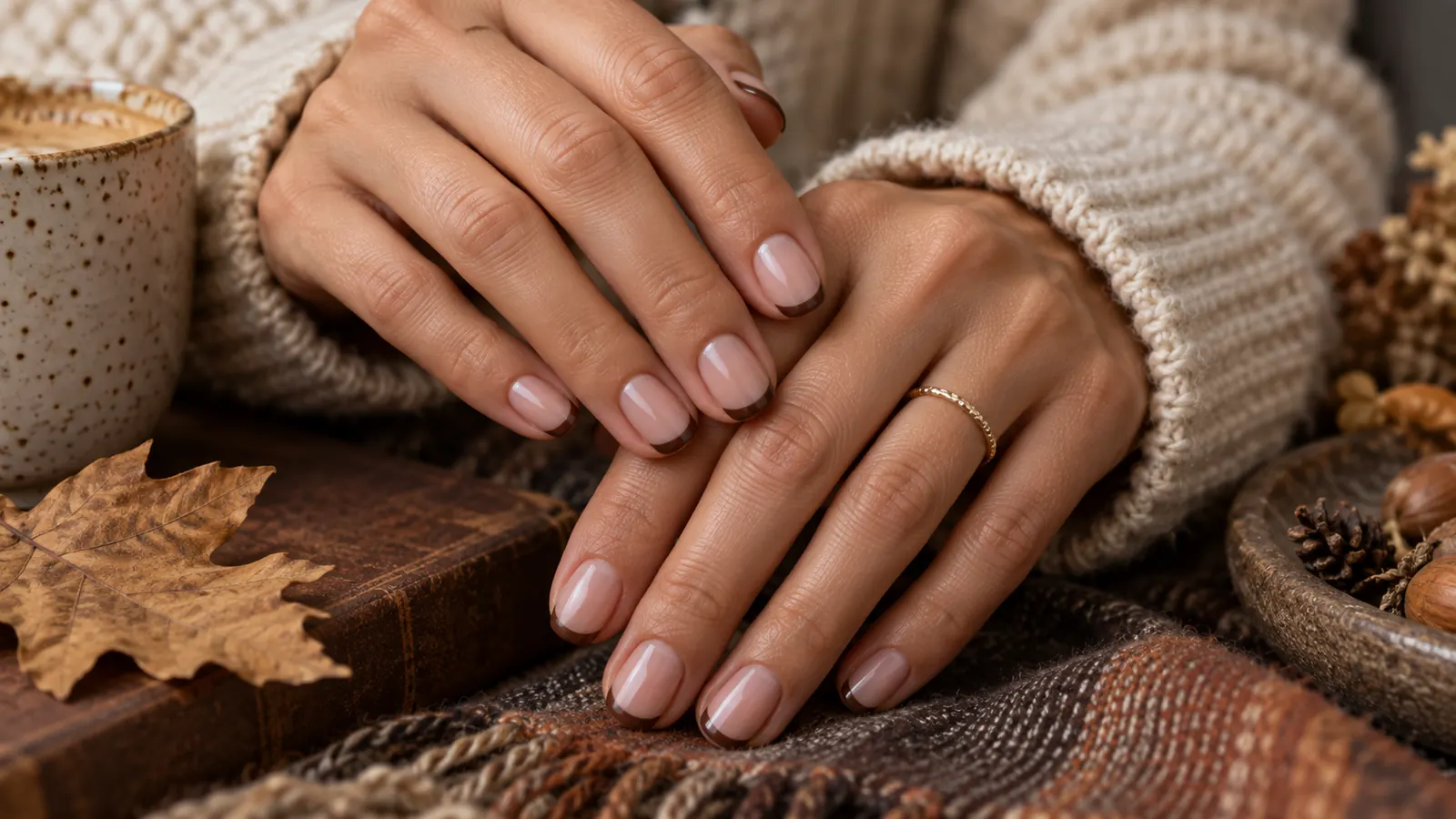
The micro-French uses a much narrower line than a classic French manicure, so it works on a short free edge. Chocolate brown softens the contrast while coordinating with fall neutrals.
Follow the natural curve of each nail and keep the band thin. A fine detail brush offers more control than using the polish brush directly.
If every line is not identical, evaluate the set from normal viewing distance. A balanced overall rhythm matters more than microscopic corrections.
Simple method
- Prepare a sheer even base.
- Draw a thin brown line along the free edge.
- Correct the underside of the curve before sealing.
Works well for: Short oval or squoval nails and people who like classic designs with a seasonal change.
3. One gold-leaf accent
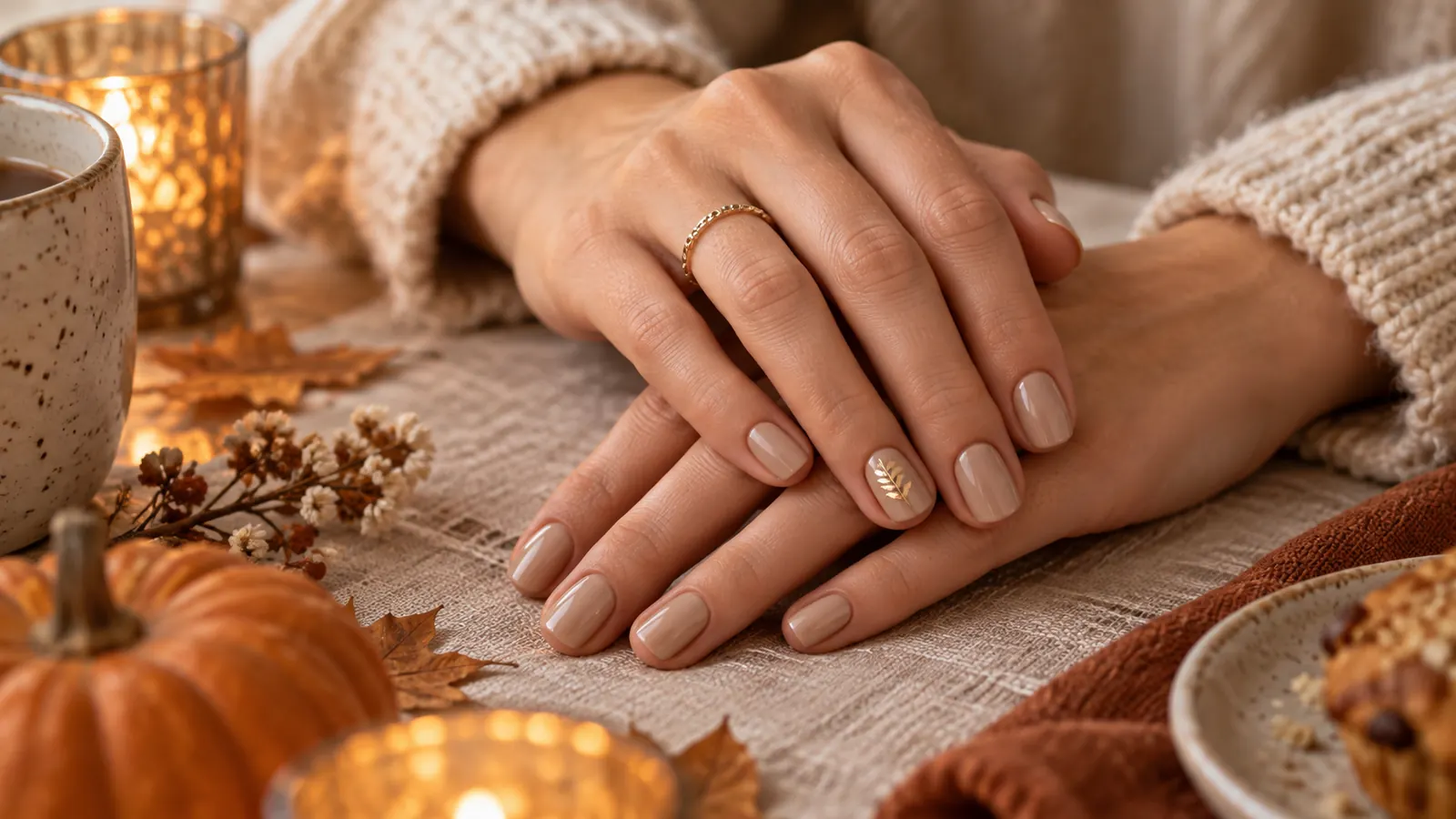
A fragment of gold leaf adds texture and light while preserving a mostly neutral manicure. Limiting it to one or two nails keeps the effect refined.
Place a very small irregular piece over a tacky layer of polish, then press it flat before top coat. Avoid thick stacks that create a raised edge.
Warm beige, taupe or transparent pink bases work well. The irregularity is part of the appeal, so the accents do not need to match exactly.
Simple method
- Paint the base and leave the accent nail slightly tacky.
- Place a tiny gold leaf fragment with tweezers.
- Press flat and cover with two thin top-coat layers if needed.
Works well for: Events, neutral wardrobes and anyone who wants subtle shine rather than glitter.
4. Muted olive half moons
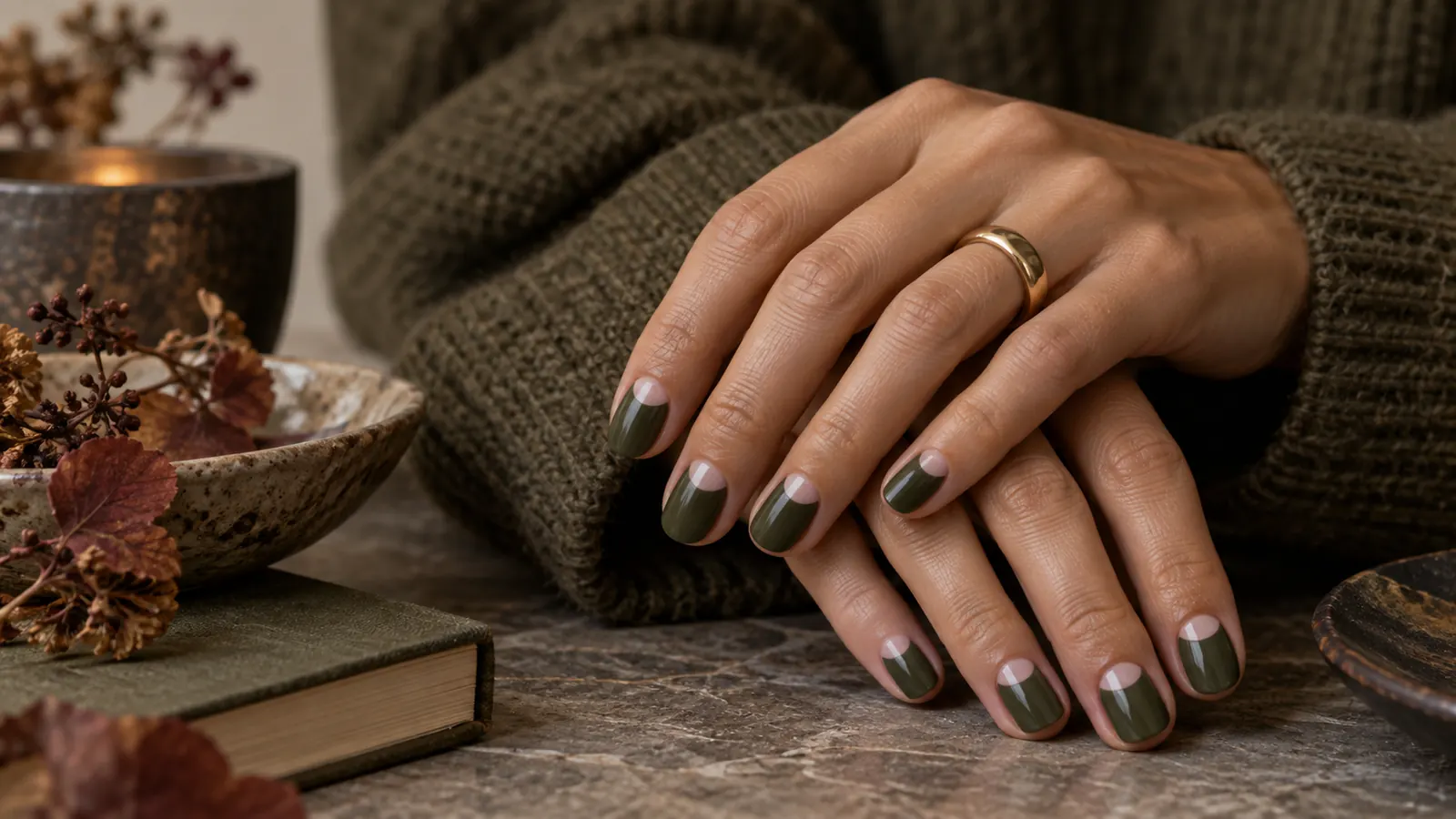
A half-moon design concentrates color near the cuticle and leaves the rest of the nail light. Muted olive is recognizably autumnal without the intensity of black or deep burgundy.
Outline a shallow curve at the base rather than creating a large circle. On short nails, a slim crescent preserves visual length.
The design can be painted freehand or guided by small curved stickers once the base is fully dry. Remove guides before the colored layer hardens completely.
Simple method
- Apply the base and allow it to set.
- Mark a shallow olive crescent at each nail base.
- Refine curves, then add top coat.
Works well for: Rounded nails and anyone who wants color concentrated away from the tips.
5. Fine terracotta diagonals
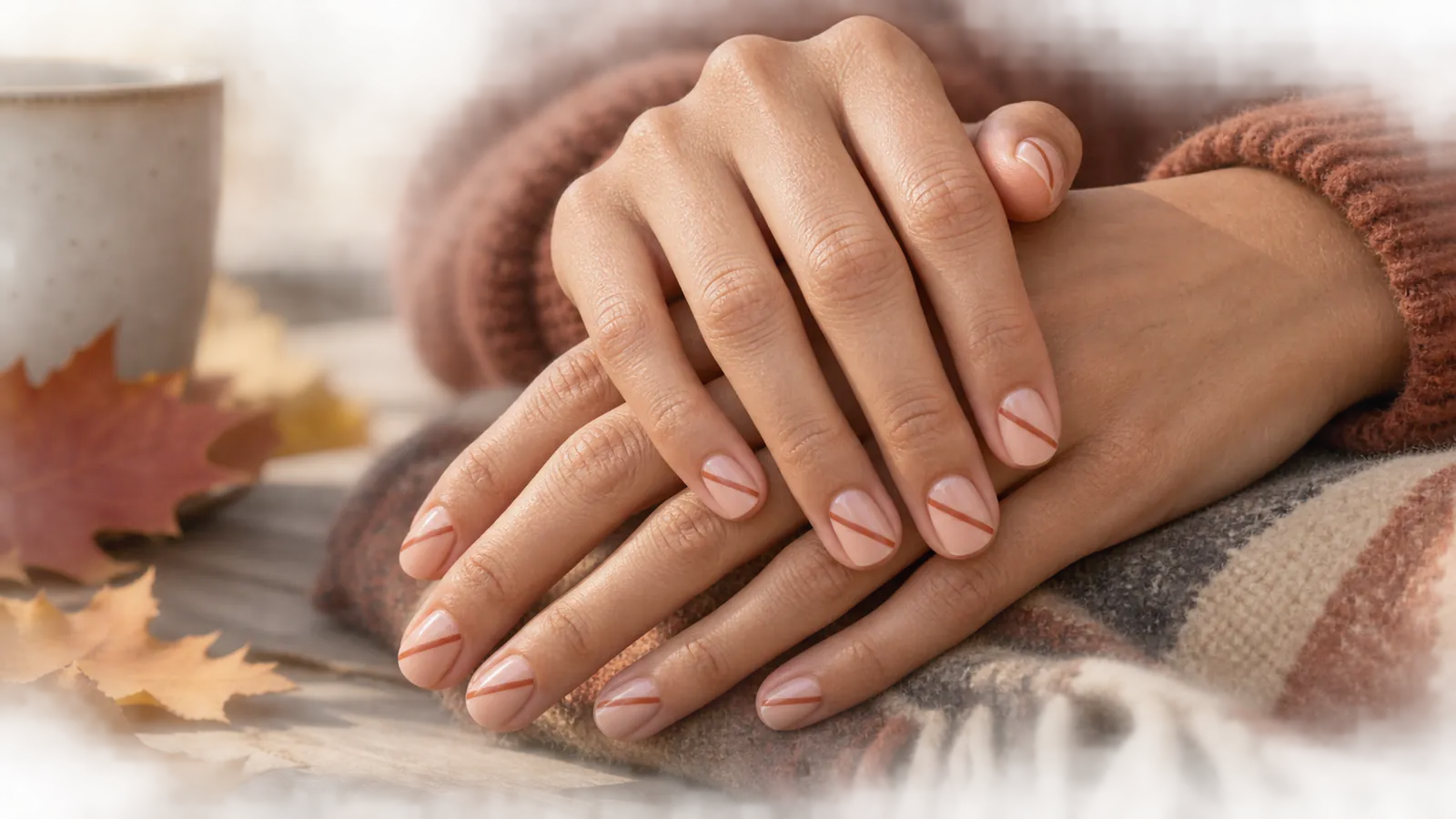
Terracotta diagonal lines feel graphic but still soft because the shade is warm and earthy. They visually lengthen short nails when placed at a consistent angle.
Use one fine line per nail, beginning at slightly different heights but maintaining the same direction. Too many crossings can turn the design into a busier geometric pattern.
A long detail brush creates a steadier stroke than a short one. Rest both hands on the table and move the receiving finger rather than only the brush.
Simple method
- Paint a transparent base.
- Pull one thin diagonal terracotta line across each nail.
- Let the art dry fully before top coat.
Works well for: Short natural nails and minimalist wardrobes with warm fall colors.
6. A single burgundy accent
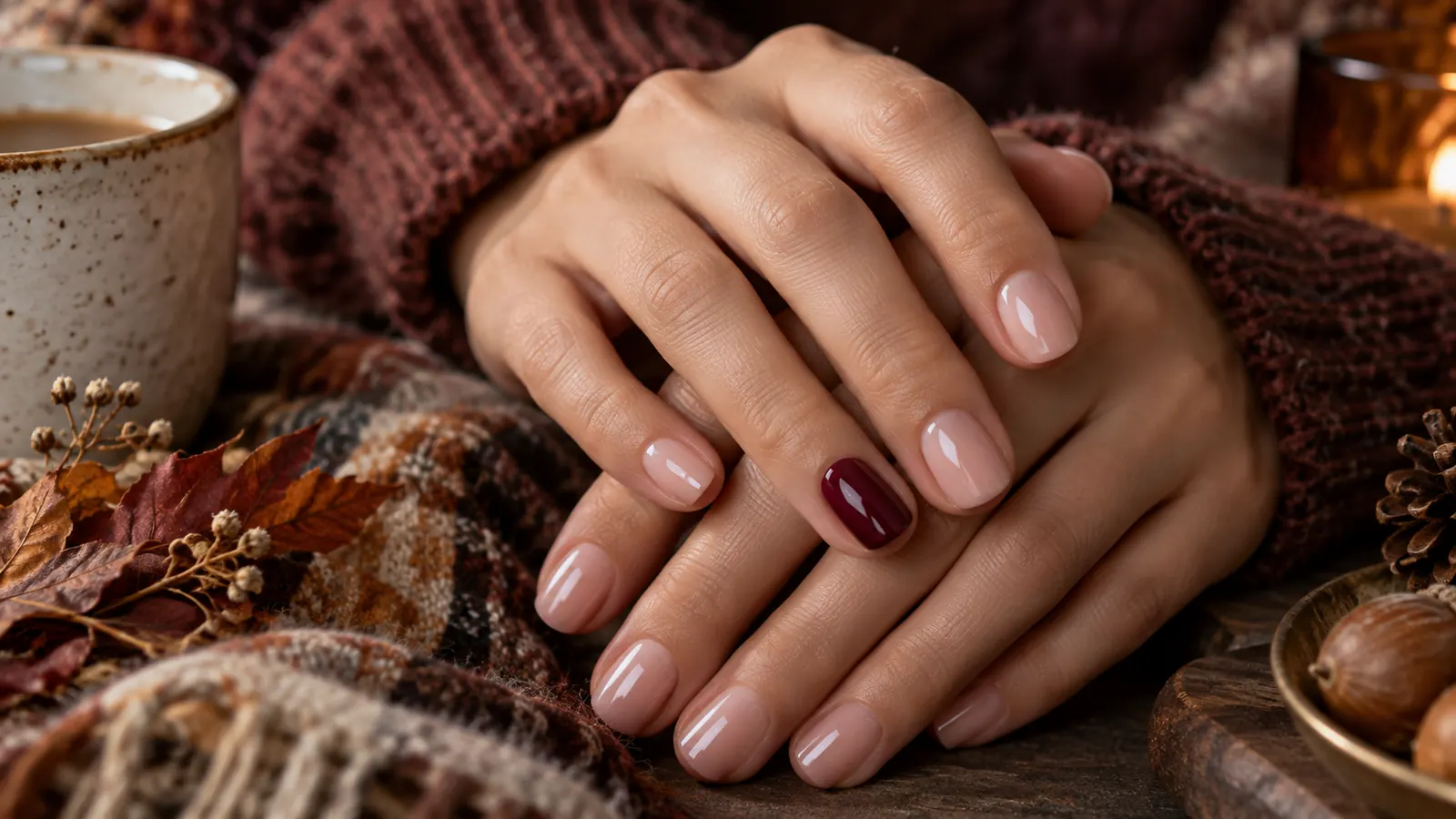
The single accent nail is familiar for a reason: it adds depth without requiring detailed art. Burgundy creates a stronger contrast than brown while remaining elegant.
Choose the same base finish across the set and paint one nail on each hand in burgundy. Ring fingers are traditional, but choosing the thumb creates a subtler effect from the front.
Use a glossy top coat over every nail so the different colors share one finish. A close burgundy match on both hands makes the set feel intentional.
Simple method
- Apply the blush base to all nails.
- Paint one selected nail per hand with burgundy.
- Seal the entire set with the same top coat.
Works well for: Anyone who wants a five-minute seasonal update with no specialist tools.
Frequently asked questions
Can minimal nail art work on very short nails?
Yes. Reduce the scale: use micro-tips, one dot or a narrow half moon. Leaving visible negative space can make a short nail appear longer.
What base works best for minimal fall nail designs?
A transparent pale-pink, beige or clear base is the most flexible. Choose an opaque neutral only when you want stronger contrast with the artwork.
How can I keep fine nail art from smearing?
Let the design dry thoroughly, load the top-coat brush generously and float it over the nail with minimal repeated strokes. Follow the drying guidance for the products you use.
Anna reviewed the article for clarity, image relevance, realistic expectations and alignment with the Lively Edit editorial policy. Safety and health claims are checked against appropriate authoritative sources; the updated date changes only after a meaningful review.
Read our editorial process →The images in this story were created with AI as original editorial visuals and reviewed to ensure that each image is relevant to the accompanying guidance.