Almond and squoval nails can both look polished, but they solve different practical problems. Almond narrows gradually toward a rounded point, creating visual length. Squoval combines a mostly straight free edge with softened corners, preserving more of the nail’s natural width.
This comparison focuses on natural nails and ordinary routines. Enhancements can support shapes that natural length cannot, but product choice, removal and maintenance should be discussed with a qualified nail professional. Never file painfully into the sidewall or use a shape to disguise persistent splitting, discoloration or inflammation.
Squoval is usually easier on short natural nails because its softly straight edge preserves width and is simple to file. Almond creates an elegant tapered line but normally needs more free edge, careful symmetry and more frequent reshaping. Your nail growth pattern and daily tasks matter more than trend status.
1. The basic silhouette
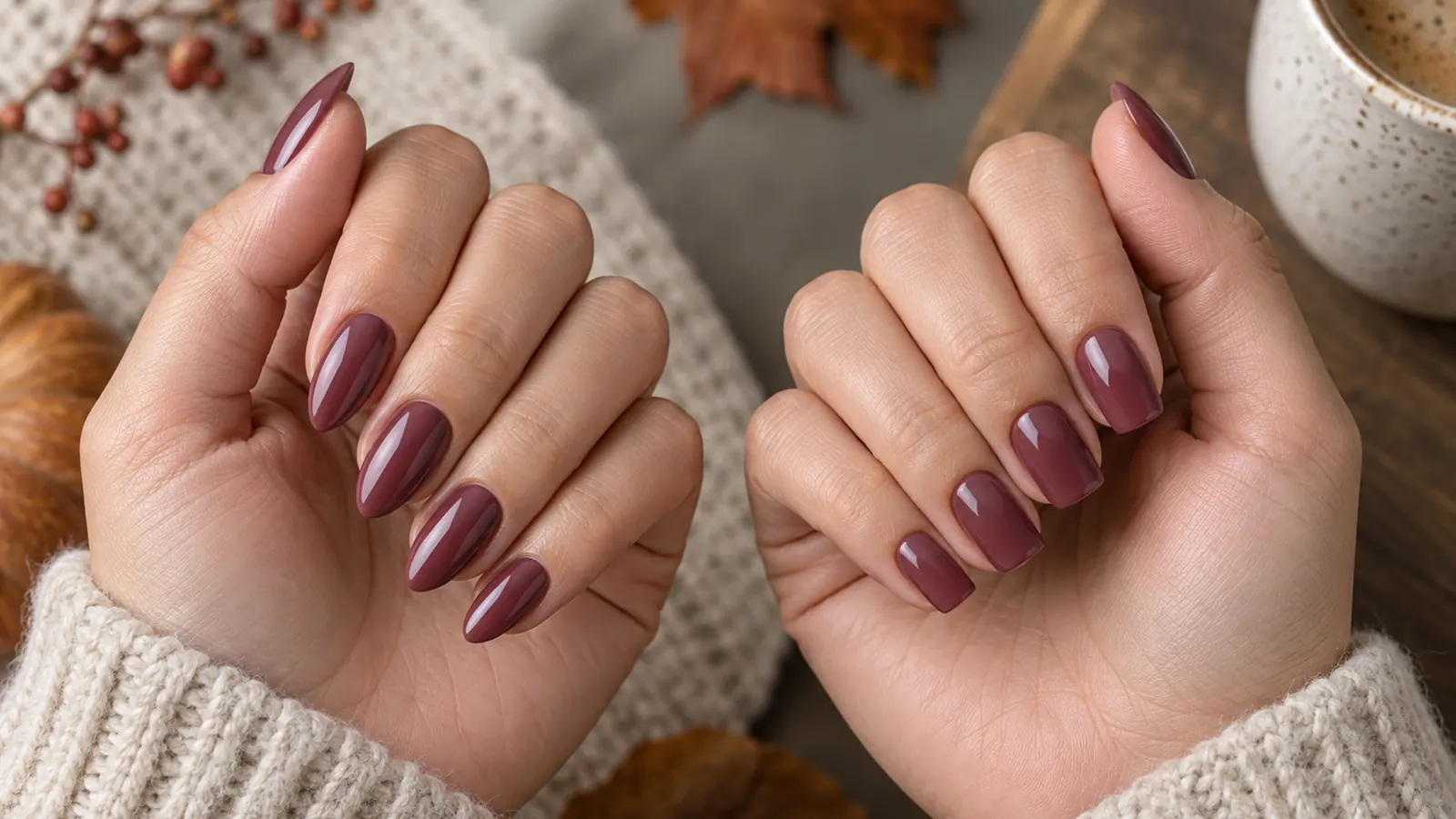
The clearest difference is geometry. Almond nails narrow progressively into a soft point, while squoval nails retain parallel-looking sides and a straight-to-gently-curved free edge. That distinction affects how much length each shape needs and how it behaves during wear.
Look at the nail from directly above rather than tilting the finger. A balanced almond should taper evenly on both sides without a sharp peak. A balanced squoval should have a clean central edge with corners softened enough not to catch.
Neither outline needs to be extreme. A soft almond can remain relatively full, and a short squoval can have a subtly curved edge. Ask for the practical version of the shape before requesting a more dramatic silhouette.
How to evaluate it
- View the nail straight on and identify its natural widest point.
- Compare the amount of free edge available on every finger.
- Choose a soft interpretation before removing additional width or length.
The advantage goes to: Squoval for a straightforward natural outline; almond for visible taper and elongation.
2. Which shape works at a shorter length?
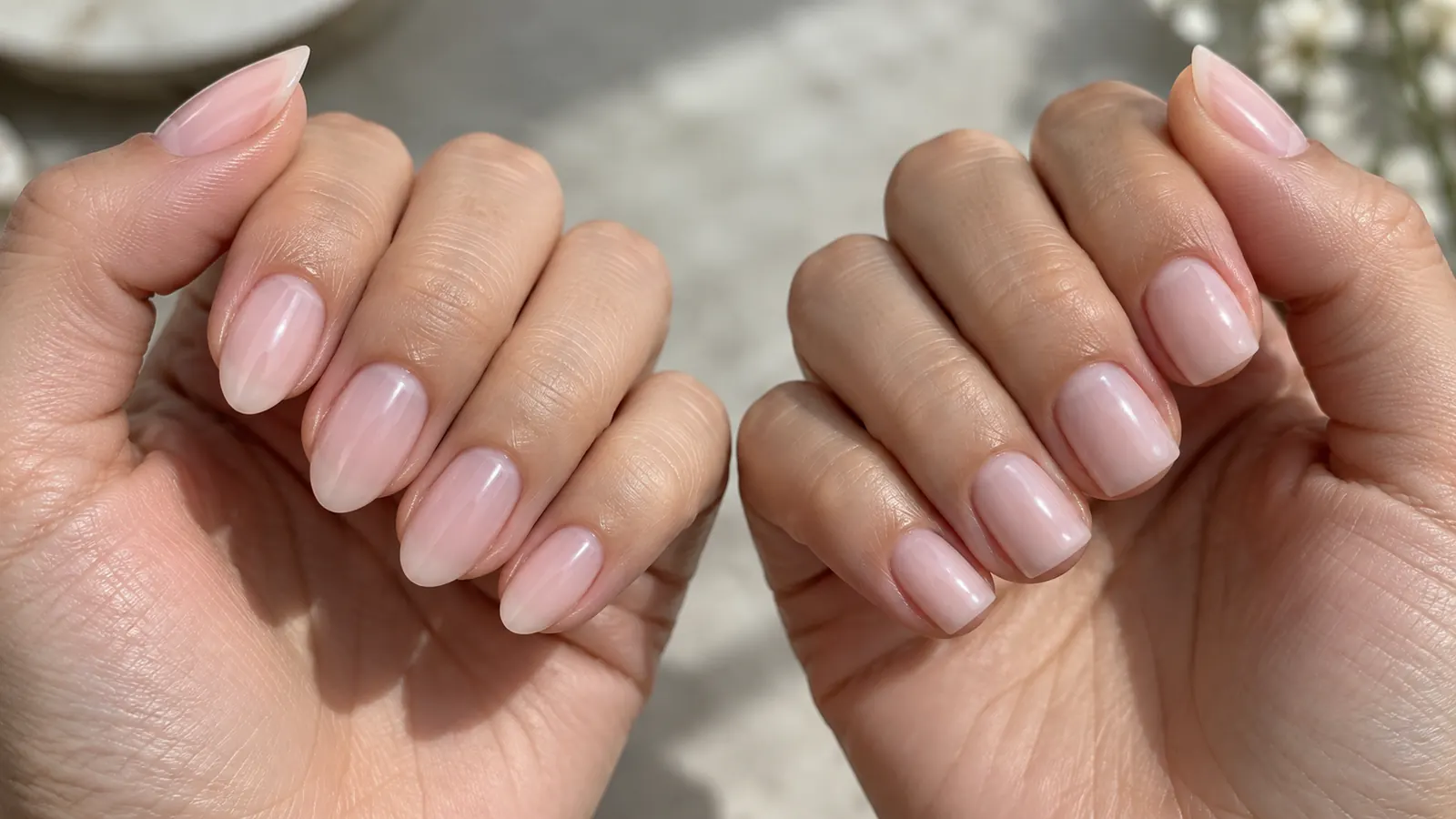
Squoval generally works sooner on growing natural nails because the shape does not require a long narrowing path. A very short nail labeled almond may become round instead, or lose too much sidewall in the attempt to create a point.
If the fingertip is still close to the free edge, begin with squoval or soft round and let length grow. Move toward almond gradually once each nail has enough extension to create symmetry without aggressive side filing.
Length varies across fingers, so judge the shortest or most fragile nail rather than designing the set around the longest. A cohesive shorter set usually looks more intentional than one weak nail repeatedly repaired to match.
How to evaluate it
- Check the shortest nail in the set.
- Preserve sidewall support while growing length.
- Transition toward almond over several files rather than in one session.
The advantage goes to: Squoval when nails are short; almond when there is enough healthy free edge to taper.
3. Comfort during everyday tasks
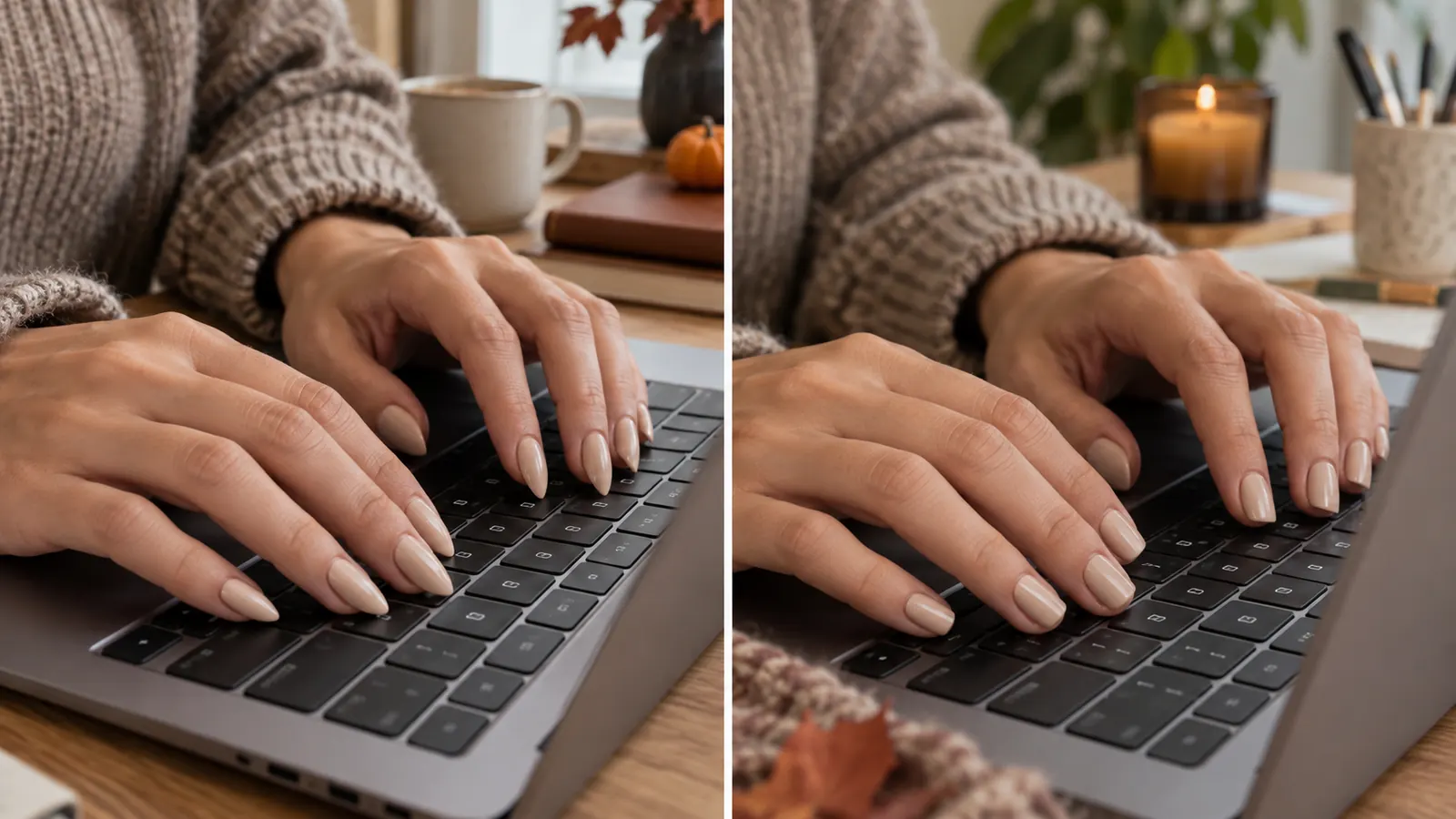
For typing, fastening jewelry, opening containers and other precise tasks, overall length is usually the biggest variable. At equal length, a smooth almond tip can glide past fabrics, while a broad squoval tip may feel more familiar to people accustomed to short nails.
Test a proposed length before committing: mimic typing, picking up a coin and using the phone. If finger position changes dramatically or pressure shifts toward the nail, shorten the set rather than expecting adaptation to solve every inconvenience.
Work requirements, caregiving and hobbies may set practical limits. A fashionable shape is not successful if it makes necessary tasks uncomfortable or encourages using the nail as a tool.
How to evaluate it
- List the hand tasks repeated most often in your day.
- Test those movements with the proposed length.
- Adjust length first, then refine the shape.
The advantage goes to: Usually squoval for short high-use nails; either shape at a comfortable, tested length.
4. Snags, corners and breakage patterns
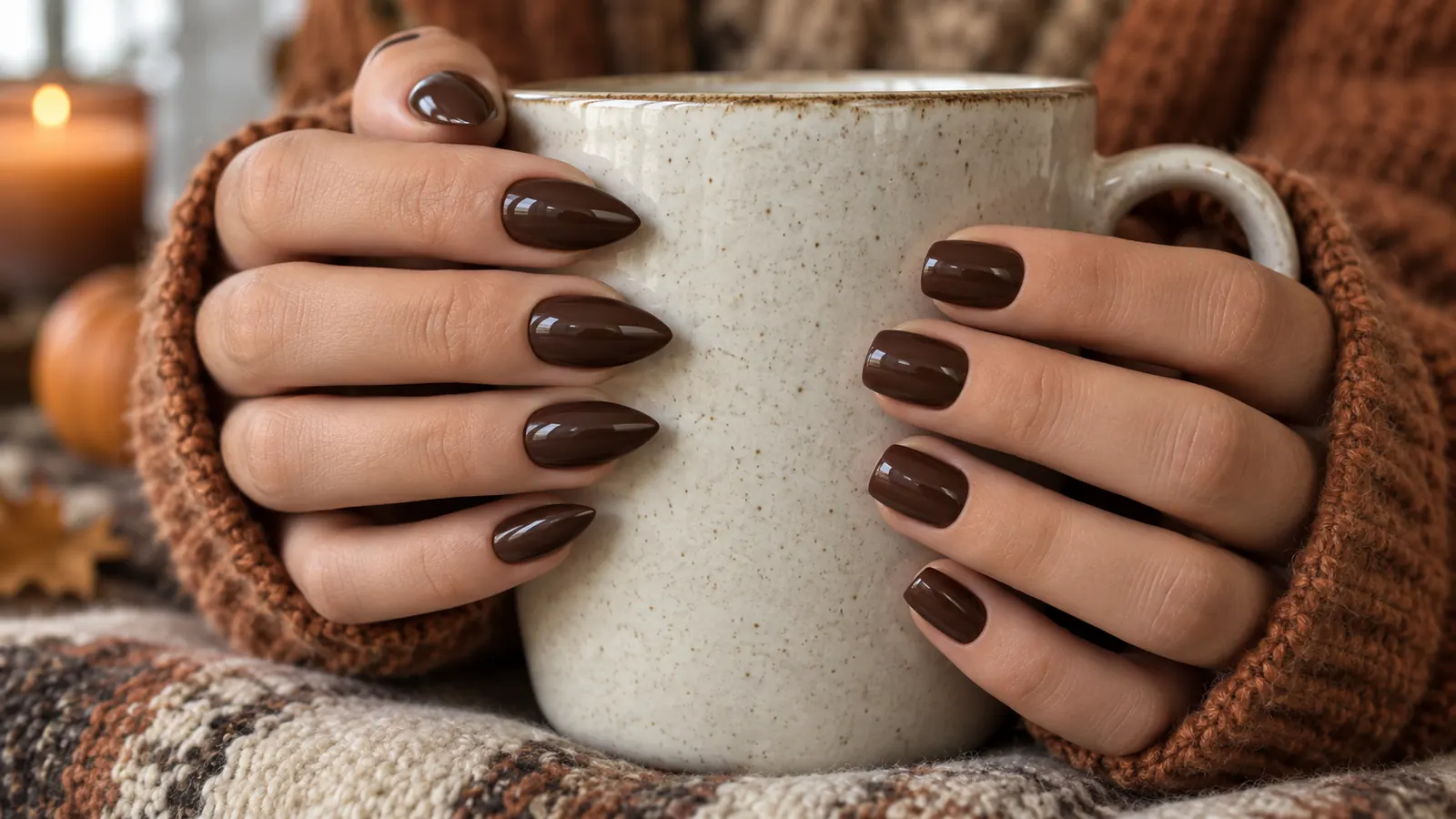
Squoval preserves side width and can feel sturdy, but corners left too sharp may snag. Almond removes the corners and offers a smooth outline, yet an overly narrow tip may become a vulnerable point on natural nails.
File in a controlled direction with an appropriate fine file, checking symmetry often. Stop when the shape is established; repeated thinning of the sidewalls can compromise support regardless of the final label.
Nail condition, hydration, previous product removal and habitual impact all influence breakage. Shape can reduce certain snags, but it cannot guarantee strength or repair damage.
How to evaluate it
- Smooth squoval corners without cutting deeply into the sides.
- Keep almond tips softly rounded rather than needle-sharp.
- Re-file small irregularities before they become catching points.
The advantage goes to: A soft squoval for preserved width; a soft almond for people who frequently catch square corners.
5. How color and nail art change the look
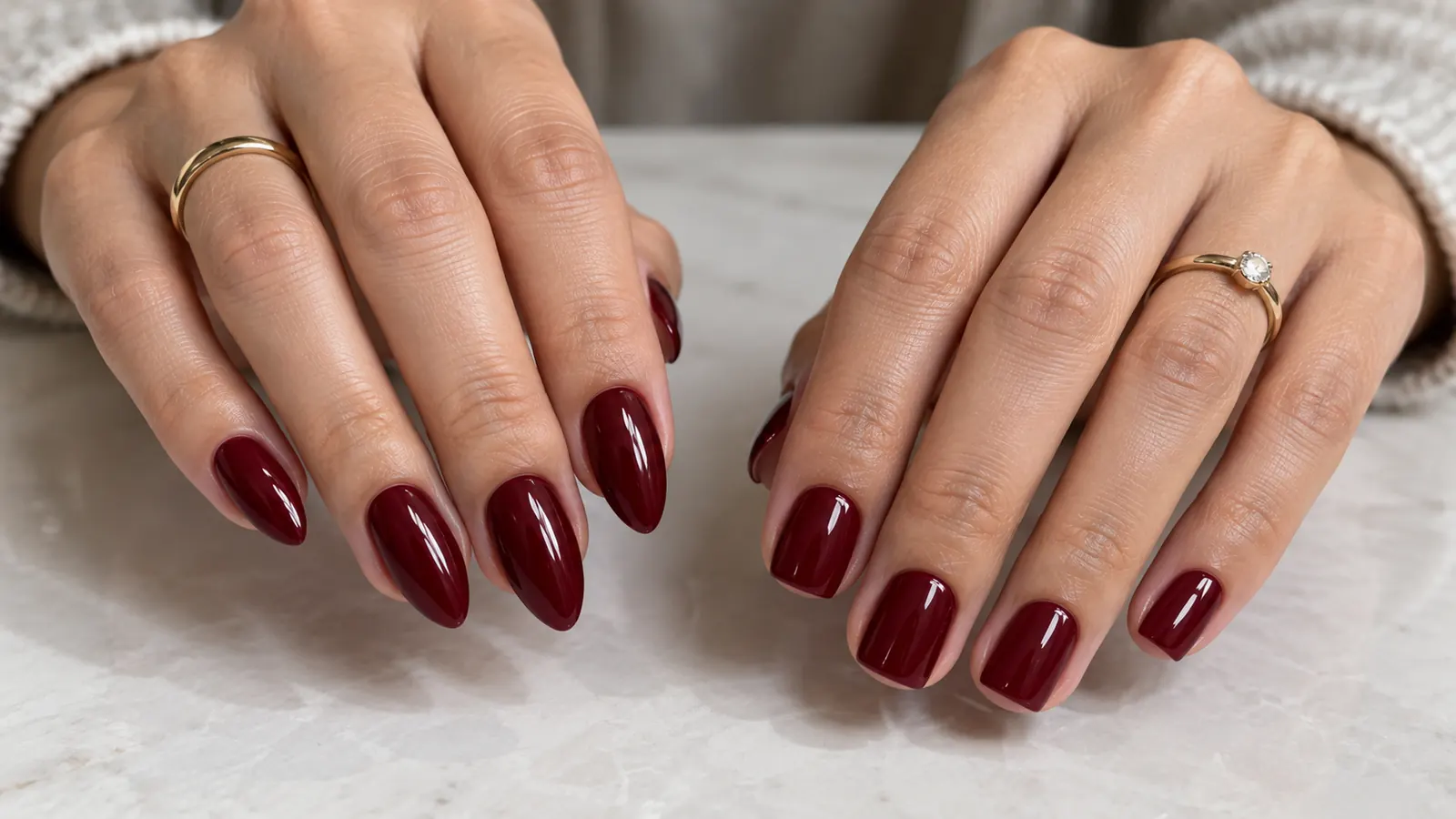
Polish reveals how strongly silhouette affects style. Almond makes a single color appear fluid and elongated. Squoval gives creams, micro-French tips and geometric designs a cleaner, more architectural base.
Choose the shape according to the finish you wear repeatedly, not one saved image. If you love broad French tips and compact dark manicures, squoval may support them naturally. If you favor gradients, sheer color and sweeping art, almond emphasizes that direction.
Dark polish makes uneven filing more visible, so refine the outline before applying color. A transparent manicure is more forgiving but still benefits from consistent length and cuticle care.
How to evaluate it
- Review the nail looks you actually repeat.
- Match their dominant lines to the shape.
- Apply one color across the set to check filing consistency.
The advantage goes to: Almond for flowing, lengthening looks; squoval for crisp minimal and French designs.
6. Maintenance and grow-out
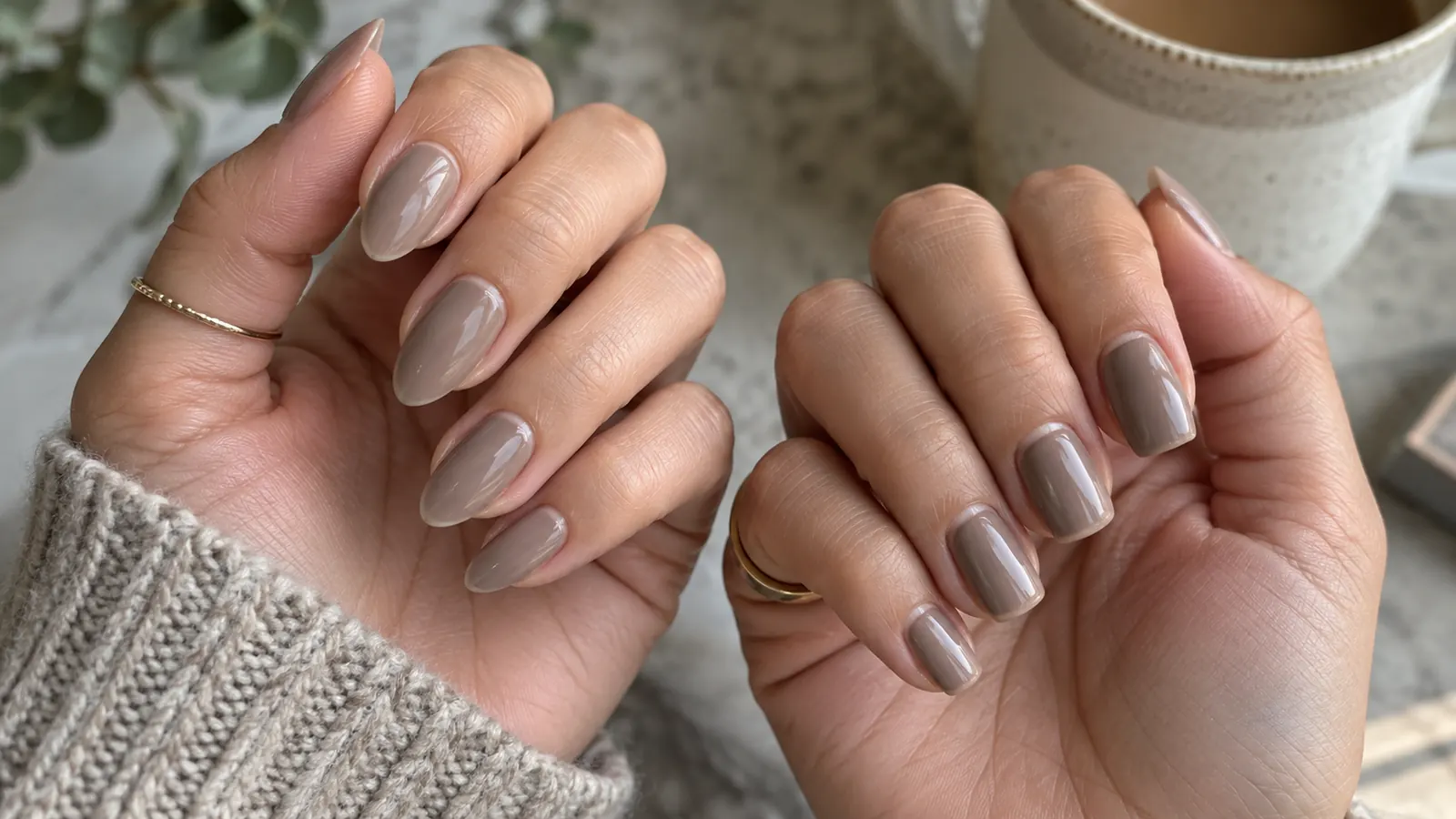
Both shapes soften as nails grow, but squoval is usually simpler to maintain with a few straight strokes and corner refinement. Almond requires comparison from several angles because one side can begin to lean or widen faster.
Refresh only the free edge and avoid repeatedly filing the sidewalls upward. For almond, alternate between hands and compare matching fingers. For squoval, keep the center from becoming rounded through repeated corner filing.
Schedule maintenance according to growth, product condition and comfort rather than waiting for a break. Seek professional help for painful lifting, inflammation or damage instead of covering the area with more product.
How to evaluate it
- Check length and symmetry weekly in natural light.
- Make small corrections with a suitable file.
- Book or perform safe removal when product integrity changes.
The advantage goes to: Squoval for easiest home upkeep; almond if you enjoy regular shaping or professional appointments.
Frequently asked questions
Is almond or squoval better for short nails?
Squoval is usually easier at a short natural length because it needs less free edge. A very soft almond becomes practical once there is enough length to create an even taper without removing side support.
Which nail shape breaks less?
There is no universal winner. Squoval preserves width but can catch at sharp corners; almond removes corners but can become weak if tapered too narrowly. Nail condition, length and daily impact matter greatly.
Can I change from squoval to almond at home?
Yes, if there is enough healthy length. Make small, symmetrical changes over time and avoid aggressive sidewall filing. A nail professional can help if the set is uneven or enhanced.
Which shape is more flattering?
Almond creates visual length; squoval creates a clean balanced outline. The better choice is the one that suits your nail proportions, maintenance preference and everyday use.
Sources and further reading
These authoritative resources support the safety or health context used in this guide. Links are reviewed at publication, but they do not replace advice from a qualified professional familiar with your circumstances.
- U.S. Food and Drug Administration — CosmeticsOfficial information on cosmetic products, labeling and safety responsibilities.
Anna reviewed the article for clarity, image relevance, realistic expectations and alignment with the Lively Edit editorial policy. Safety and health claims are checked against appropriate authoritative sources; the updated date changes only after a meaningful review.
Read our editorial process →The images in this story were created with AI as original editorial visuals and reviewed to ensure that each image is relevant to the accompanying guidance.